
REVIEW · COMMUNIST-ERA BULGARIA TOURS
Sofia Food & Tasting Tour with Communist-Era Tram Ride
Sofia turns into a tasting menu fast. This 3-hour food and tram tour mixes classic landmarks with real Bulgarian flavors, guided by Peter, who ties each stop to the city’s story. I especially like the small-group feel (max 11) and the way the plan stays organized while still letting you ask questions.
What I love most is the balance: you get major Sofia sights like St. Alexander Nevsky Cathedral plus multiple food moments, including beer and local wine. The only drawback to note is that it is a short, fairly active walking route with tram connections, so you will want comfy shoes, especially in warm weather.
In This Review
- Key Highlights You’ll Actually Care About
- Sofia in 3 Hours, with a Communist-Era Tram Ride
- Entering St. Alexander Nevsky Cathedral First
- Bulgarian National Library and the Nearby Power of Neoclassicism
- Sofia University, Eagles’ Bridge, and a City That Works
- Zhenski Pazar Market and Sofia’s “Area of Tolerance”
- West Gate of Serdica and the Roman Layer Under Your Feet
- Ancient Serdica Archaeological Complex: Streets, Insulas, and the Decumanus
- Central Sofia Synagogue: Sephardic Pride in Plain Sight
- Central Mineral Baths and Mollah Effendi Mosque, plus the 46°C Reality
- Five Food Stops, a Traditional Starter, and Smart Drinking Choices
- The Ending at Central Market Hall, and Why That Last Hour Feels Useful
- Value, Pace, and Who This Tour Fits Best
- Should You Book This Sofia Food and Tasting Tour?
- FAQ
- How long is the Sofia Food and Tasting Tour?
- What does the tour cost?
- Where do I meet, and where does the tour end?
- What food and drinks are included?
- Are admissions to the main sights included?
- Can the tour accommodate dietary restrictions?
- How large is the group?
- What is the cancellation and refund policy?
Key Highlights You’ll Actually Care About
- A real tasting route with 5 food stops, not just a couple of bites and a photo
- Beer and a glass of local wine included, plus snacks, dessert, and a traditional starter
- Top architecture stops with free admission tickets, including the cathedral and key landmark buildings
- A Communist-era tram ride segment to break up the day and help with heat
- Peter’s high-touch guiding style, including smart adjustments for what you already saw
- End at Central Market Hall, a practical spot to keep exploring on your own afterward
More of the concrete era, told straight
- Communist Walking Tour of Sofia★ 5.0 · 690 reviews
- Sofia Communist History 2-Hour Tour in a Classic Trabant★ 5.0 · 45 reviews
- Sofia Under Communism: Self-Guided Puzzle Quest★ 5.0 · 9 reviews
- Self-guided Tour in the Museum of Socialist Art★ 4.0 · 4 reviews
Sofia in 3 Hours, with a Communist-Era Tram Ride
This tour is built for people who want a lot of Sofia in one go, without turning it into a rushed checklist. You start near the Patriarchal Cathedral St. Alexander Nevsky and move through major districts with short walking segments, then connect areas by tram. In hot weather, that tram piece matters, because you get relief from the sun and keep your energy for the tastings.
The group stays small (up to 11), so you can actually keep up and hear explanations, not just stand in the crowd. And because it is offered in English with a mobile ticket, it is easy to start without extra paperwork hassle.
Entering St. Alexander Nevsky Cathedral First
You kick things off at St. Alexander Nevsky Cathedral, one of Sofia’s big symbols and an easy place to orient yourself. The cathedral’s Neo-Byzantine style gives you instantly recognizable domes and a dramatic scale that sets the tone for the rest of the day.
The admission is listed as free for this stop, so you are not paying extra just to see it. This matters for value, because the tour price already covers the tasting parts and the day’s food.
Bulgarian National Library and the Nearby Power of Neoclassicism
From there you head toward the Bulgarian National Library, officially named after St. Cyril and St. Methodius. The library is described as Bulgaria’s largest book treasury, with 8.5 million documents, plus about 17,000 rare volumes and periodicals printed from the 15th to 21st centuries.
Even if you do not have time to read every panel, the takeaway is how Sofia values learning and preservation. The stop is short, but it gives context for why the city is not only about monuments, it is also about institutions.
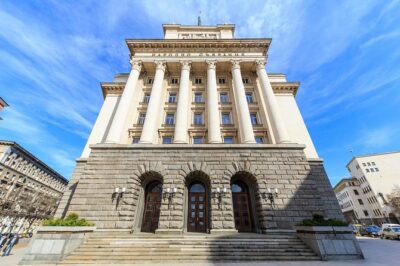
Nearby, you also pass the National Assembly building, noted for its historic significance. The design is linked to architect Constantin Yovanovic, built from 1884 to 1886, with an architectural language that feels neoclassical and formal.
Still hungry? More Bulgarian tables

Sofia University, Eagles’ Bridge, and a City That Works
Next up is Sofia University St. Kliment Ohridski. It is founded in 1888, and the tour route places you in the area near Eagles’ Bridge, which helps you understand the geography of central Sofia. On Monday to Friday, the central hall with its big stained glass windows may be accessible to visitors, so it is worth knowing the day you are going.
This stop is a good reminder that Sofia’s center is not just for tourists. Universities bring real daily life: people walking between classes, students heading to meetings, and a street-level rhythm that you feel even during a guided tour.
Zhenski Pazar Market and Sofia’s “Area of Tolerance”
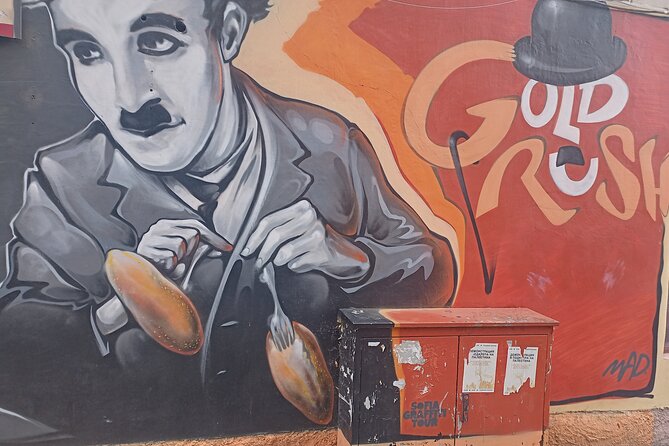
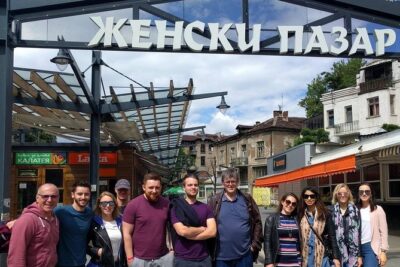
Then comes Zhenski Pazar, a market area with a strong local feel. The market is described as drawing close to 60,000 visitors daily, which is a lot, even for a major city center. The tour also frames the area as the so-called Area of Tolerance because churches and other religious communities sit close to each other.
In practical terms, this is where the tour starts to feel most like food in context. You get a sense of how Sofia eats and socializes, not just what it looks like. If you like markets and the everyday side of city life, you will appreciate this stop.
West Gate of Serdica and the Roman Layer Under Your Feet
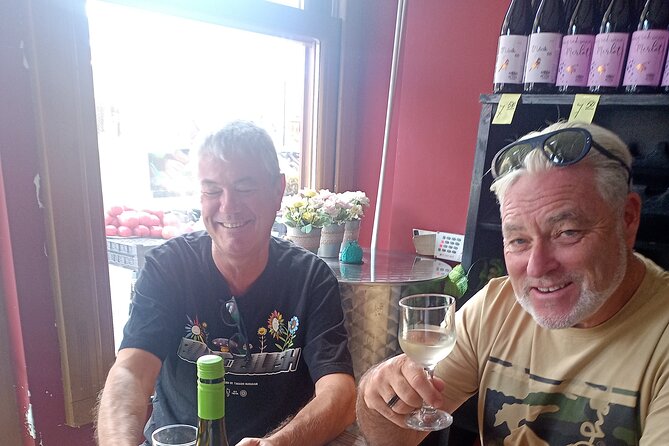
The tour shifts from Ottoman and modern Sofia back to Roman roots with the West Gate of Serdica. This is tied to Sofia’s ancient name, Serdica, and it is fascinating because you get details you can picture, not just general claims.
The fortification wall associated with the West Gate dates to the second half of the 2nd century AD, with a listed width of 2.20 m. Then, at the end of the 3rd and start of the 4th century AD, the wall saw remodeling, and a ditch was dug in front of it, described as 14 m west and about 2 m deep and 5 m wide. Even for short viewing time, that kind of specificity makes the site easier to understand.
Ancient Serdica Archaeological Complex: Streets, Insulas, and the Decumanus
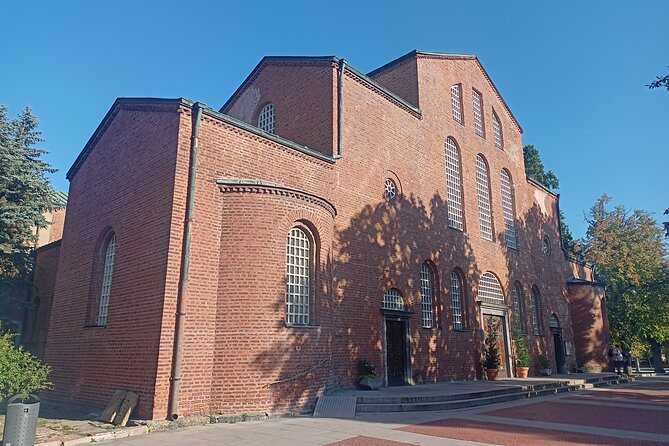
Right after the gate, you see the Ancient Serdica Archaeological Complex. It’s organized into two zones, including the Largo zone under Nezavisimost Square, where unearthed remains are used for cultural events.
One key feature you should look for is the Roman street, the decumanus maximus, connecting the eastern and western gates of the city. The tour also points out a large residential building covering an insula, with small shops where people would buy food and goods.
This is where the tour does something smart: it connects your walking route to what used to be a working city. It also helps explain why Sofia’s center feels dense and layered, because you are not only looking at buildings above ground.
Central Sofia Synagogue: Sephardic Pride in Plain Sight

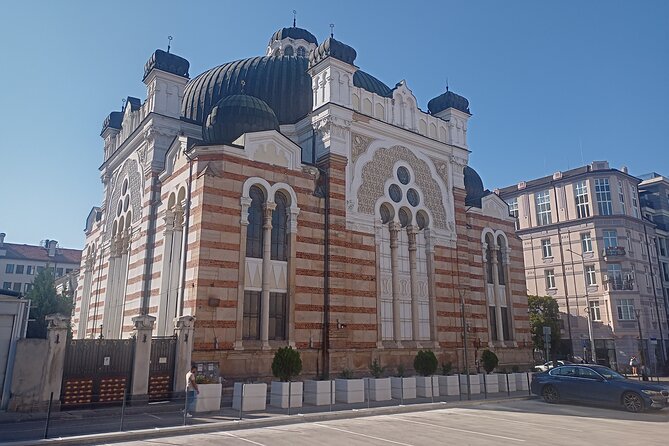
A highlight in the route is the Central Sofia Synagogue, described as a point of pride for the Bulgarian Jewish community. The tour frames it as one of the three largest Sephardic synagogues in Europe and the largest on the Balkan Peninsula.
You do not need a deep background to appreciate this stop. The architecture and significance make it a strong contrast to the Orthodox and Roman layers you saw earlier, and it broadens your view of Sofia beyond just its dominant tourist icons.
Central Mineral Baths and Mollah Effendi Mosque, plus the 46°C Reality
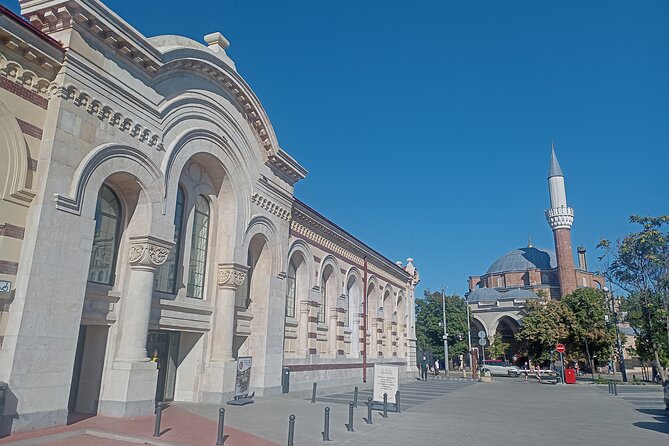
One of the most memorable parts of this tour is the stop connected to Sofia’s natural hot springs. The mineral waters are described at 46 degrees Celsius, which is a striking fact to keep in mind when you are imagining what people used these waters for before modern plumbing took over.
The Central Mineral Baths building is described with Vienna Secession style, while also integrating Bulgarian, Byzantine, and Eastern Orthodox ornamental elements. The architects are named as Petko Momchilov and Friedrich Grünanger, with construction and approval dates given for 1904 to 1905 and approval on 30 January 1906.
Right nearby is the story of Mullah Effendi Kada Seyfullah and the related Mollah Effendi Mosque. The tour also notes the association with Ottoman architect Mimar Sinan, with a date clue based on the number 974 above the entrance arch, tied to the Hijri calendar or 1566 to 1567 AD.
Even if you are not planning a bath, this stop gives you a rare mix of city culture and daily-life infrastructure. It’s the kind of place where Sofia’s history shows up as something people used for real comfort and health.
Five Food Stops, a Traditional Starter, and Smart Drinking Choices
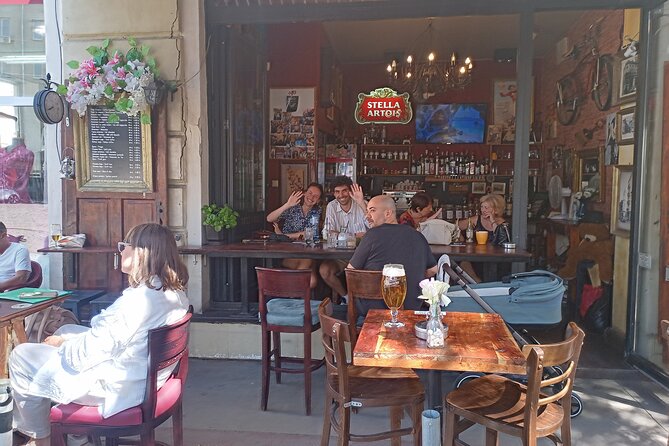
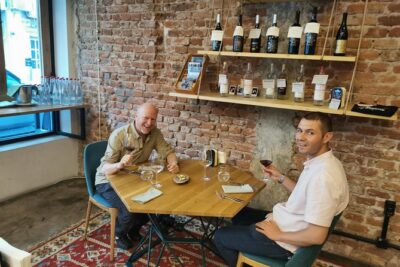
Now to the reason you book. The tour includes 5 food stops plus a traditional starter, meals and salad, snacks, and dessert. Alcoholic drinks included are Bulgarian beer and a glass of local quality wine, and that is clearly part of the tasting plan.
The sample menu lists Bulgarian traditional sausages and cheese with wine or beer as the starter. You also get traditional meals and salad, and a steady flow of snacks and dessert so you do not feel like you are grazing your way through.
Here is a practical tip that matters: I like how the guide’s approach lines up with how to actually enjoy the food. One clear advice from the tour is to skip breakfast at your hotel before you go, because the tour includes breakfast. If you show up full, you might still enjoy everything, but you will not get the same chance to taste widely.
You can also plan around what you prefer. The tour includes options for dietary restrictions like vegetarian, vegan, and gluten-free, as long as you specify your needs during booking. The allergy list is extensive, including gluten cereals, milk, eggs, nuts, and more, so if you have serious allergies, you will want to communicate clearly in advance.
The Ending at Central Market Hall, and Why That Last Hour Feels Useful
You end at Central Sofia Market Hall, in the city center. This is a great finish because you leave with food ideas in your head and a real local place to wander next. If you want to grab a snack for the walk back, or buy ingredients you cannot get at home, this is a convenient place to do it.
It also fits the logic of the route. You start with major landmarks for orientation, then move through layers of Sofia’s past, and you close with a modern, food-focused hub where daily life is still happening.
Value, Pace, and Who This Tour Fits Best
For $91.07 per person, the value comes from what is actually included. You are paying for guided time, transportation between stops (including tram travel), and a full tasting structure with beer and local wine, traditional meals and salad, plus snacks and dessert. You are also getting a “sights with meaning” approach, since the route includes major Sofia landmarks and many admissions are listed as free.
The pace is short walks between key locations, so it is not a marathon. Reviews highlight that the tour is organized and smooth, and that Peter can adjust the plan if you already visited some items. In hot weather, the tram helps keep the day comfortable, so you are not cooking through every block.
This tour is ideal if you want:
- A first-trip overview of Sofia that includes food, not just architecture
- A guide who explains how different time periods shape what you see
- A small group experience that still feels lively and social
If you hate walking, you might find the day active, even with tram segments. And if you do not drink beer or wine, you can still enjoy the tastings, but you may lose some of the tour’s included value.
Should You Book This Sofia Food and Tasting Tour?
I would book it if you want Sofia in one organized package, with a strong food component and a guide who knows how to connect flavors to the city. The combination of 5 tastings, major sights, and the tram connection makes it easier to enjoy rather than just rush from photo spot to photo spot.
Skip it if you are only looking for deep museum time or if you want a fully seated food experience with minimal walking. Otherwise, this is a smart way to start a Sofia trip, especially if you like history that you can see on the street, paired with dishes you will remember.
FAQ
How long is the Sofia Food and Tasting Tour?
The tour lasts about 3 hours, and it includes travel time between places.
What does the tour cost?
The price is $91.07 per person.
Where do I meet, and where does the tour end?
You start at Patriarchal Cathedral St. Alexander Nevsky in Sofia Center (pl. Sveti Aleksandar Nevski). The tour ends at Central Sofia Market Hall (Central Sofia Market Hall, bul. Knyaginya Maria Luiza 25, level -1).
What food and drinks are included?
The tour includes beer and a glass of local quality wine, a traditional starter (Bulgarian sausages/cheese with wine or beer), traditional meals and salad, snacks (appetizers and dessert), and 5 food stops.
Are admissions to the main sights included?
The itinerary notes free admission ticket for each listed stop, including St. Alexander Nevsky Cathedral, the Bulgarian National Library, Sofia University, and the archaeological and landmark sites.
Can the tour accommodate dietary restrictions?
Yes. Vegetarian, vegan, gluten-free, and other dietary restrictions can be accommodated if you list your needs at booking.
How large is the group?
The tour has a maximum group size of 11 travelers.
What is the cancellation and refund policy?
You can cancel for a full refund up to 24 hours in advance of the experience start time. If you cancel less than 24 hours before, the amount paid is not refunded.
More Bulgaria Reviews
- Rila Monastery and Boyana Church Full-Day Tour★ 4.5 · 918 reviews
- Sofia Escape Room – Teorema Rooms★ 5.0 · 895 reviews
- From Sofia: Rila Monastery & Boyana Church Day Tour★ 4.5 · 866 reviews
- Communist Walking Tour of Sofia★ 5.0 · 690 reviews
Bulgaria by the Plate
- Wine Tasting in Heart of Sofia★ 5.0 · 545 reviews
- Culinary Adventure To The Fungi And Botanical Kingdom Of Bulgaria★ 5.0 · 21 reviews
- Market Food Tour★ 4.5 · 21 reviews
- Sofia Wine Walk★ 5.0 · 18 reviews
The Concrete Era, Told Straight
- Communist Walking Tour of Sofia★ 5.0 · 690 reviews
- Sofia Communist History 2-Hour Tour in a Classic Trabant★ 5.0 · 45 reviews
- Sofia Under Communism: Self-Guided Puzzle Quest★ 5.0 · 9 reviews
- Self-guided Tour in the Museum of Socialist Art★ 4.0 · 4 reviews
Newer Bulgaria reviews, fresh off the desk
- Private Winter Day Trip to the Rila Mountain
★ 4.5 · 3 reviews - Transfer from Sofia to Stara Zagora
★ 5.0 · 3 reviews - Tour to Koprivshtitsa and the Buzludzha monument incl the Seuthes Thracian Tomb
★ 3.5 · 3 reviews - Catacomb Tour in Sofia guided by a Local
★ 4.5 · 3 reviews - Symbol of the Communism Buzludzha monument and the Rose valley
★ 5.0 · 3 reviews - Private 2 Hours Sofia Street Art and Graffiti Tour
★ 5.0 · 3 reviews
Communist-Era Bulgaria Tours, compared.
 ★ 5.0Communist Walking Tour of SofiaFrom $21690 reviews
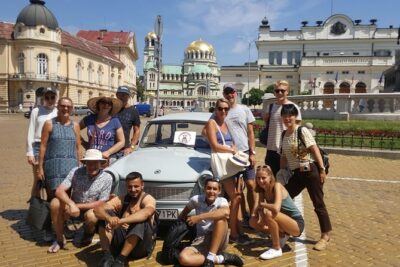 ★ 5.0Sofia Communist History 2-Hour Tour in a Classic TrabantFrom $24045 reviews
 ★ 5.0Sofia Under Communism: Self-Guided Puzzle QuestFrom $69 reviews
Communist Heritage Tour- Buzludzha and The Might of the East Block AviationFrom $1136 reviews
★ 5.0Sofia Under Communism: Self-Guided Puzzle QuestFrom $69 reviews
Communist Heritage Tour- Buzludzha and The Might of the East Block AviationFrom $1136 reviews
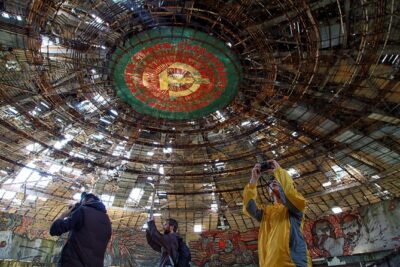 ★ 5.0A Day trip to the Thracian Kings, The Valley of Roses & BuzludzhaFrom $1076 reviews
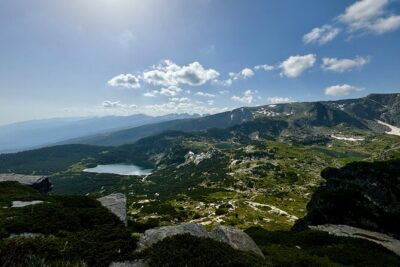 ★ 5.0Explore Bulgaria’s COMMUNISM Era–Todor Zhivkov DayTrip from SofiaFrom $1094 reviews
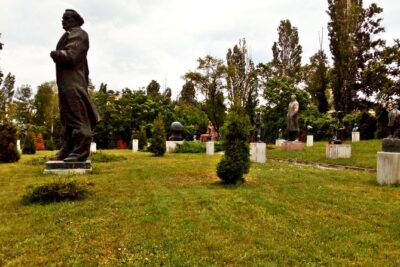 ★ 4.0Self-guided Tour in the Museum of Socialist ArtFrom $84 reviews
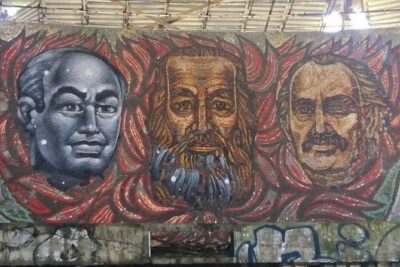 ★ 5.0Symbol of the Communism Buzludzha monument and the Rose valleyFrom $2313 reviews
Browse the lists this tour appears in