
REVIEW · SOFIA CITY & WALKING TOURS
Communist Walking Tour of Sofia
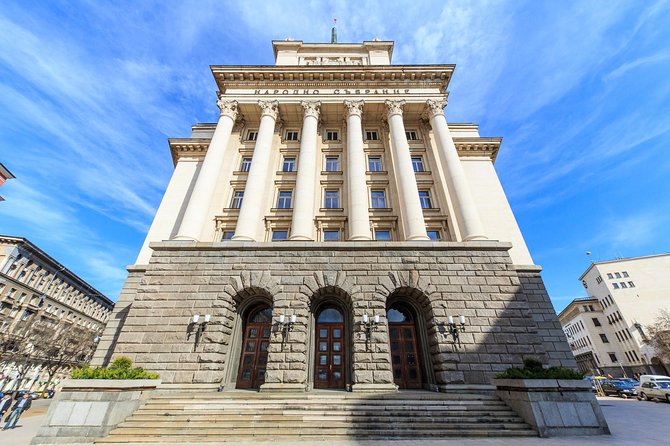
Sofia’s Soviet signs are still here. On this 3-hour communist walking tour, I like how the Cold War comes alive through the communist-era landmarks you pass, ending near a Berlin Wall section at the National Palace of Culture.
I really enjoyed two things: the personal, family-linked storytelling guides bring to the buildings (I’ve had guides such as Nikola, Vasko, Yoan, and Stefan), and the smart route that mixes power sites, propaganda symbols, and everyday life clues. It also helps that site access is covered, so you are not juggling extra tickets while you walk.
One consideration: the tour starts at 4:00 pm, so in winter the final stretch can get dark fast, which makes the late stops harder to see clearly.
In This Review
- Key things to notice
- Why Sofia’s communist-era landmarks feel real, not textbook
- Price and what $21.77 buys you
- Meeting point details so you don’t waste time finding the group
- Timing: the 4:00 pm start and how to dress for it
- Stop-by-stop: from Sofia City Court to the Palace of Justice area
- Saint Parascheva (St Petka) church: religion under pressure
- Presidency Building: the Soviet arrival story
- Communist Party Headquarters and the Largo complex symbols
- City Garden and the Mausoleum story
- Soviet Army Monument: why it’s controversial, and why graffiti matters
- National Palace of Culture (NDK): a communist megastructure with a second life
- The Berlin Wall finale at NDK park: how the story ends
- Who should book this tour, and who might skip it
- Should you book this communist walking tour of Sofia?
- FAQ
- What is the price of the Communist Walking Tour of Sofia?
- How long is the tour?
- What time does the tour start?
- Where does the tour start and end?
- Is the tour offered in English?
- Do I need to buy separate tickets for the stops?
- Is a mobile ticket used?
- How big are the groups?
- Can children join?
- What is the cancellation policy?
- Are service animals allowed and is it near public transportation?
Key things to notice
- Small group cap (25) keeps the energy tight and Q and A actually works.
- Cold War context tied to specific buildings rather than vague dates.
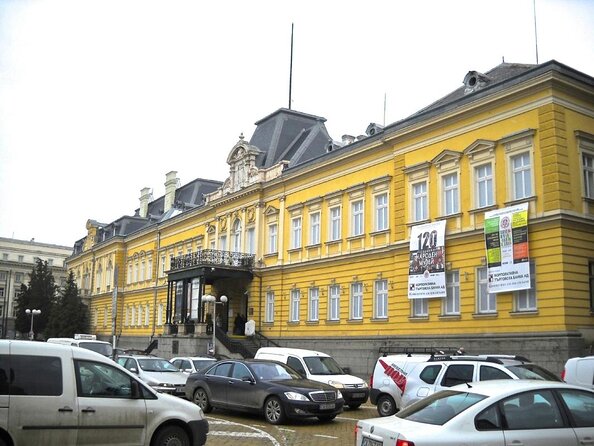
- Saint Parascheva (St Petka) church adds the religious angle under communism.
- Most stops are quick, about 10 minutes, so you cover a lot without feeling stuck.
- Soviet Army Monument and its afterlife includes controversy plus the look of protest, like graffiti.
- You finish by a Berlin Wall section at NDK park, with a clear wrap-up on how it ended.
Another way round Sofia on foot
- Communist Walking Tour of Sofia★ 5.0 · 690 reviews
- Sofia Highlights 2 Hour Sightseeing Walking Tour★ 5.0 · 442 reviews
- Guided Walking Tour of Sofia★ 5.0 · 143 reviews
- Private city walking tour of Sofia★ 5.0 · 141 reviews
Why Sofia’s communist-era landmarks feel real, not textbook
Sofia has a talent for keeping history in plain sight. This tour leans into that. Instead of treating communism like distant politics, you look at the actual places where the system showed up: government buildings, monuments, party headquarters symbols, and cultural megastructures.
What makes it click is how the guide frames ideology through everyday details. You do not just hear what communism claimed. You learn why it gained traction in Bulgaria, how it shaped daily routines, and why it finally collapsed. Even if you only know the basics from movies or headlines, you’ll walk away with a cleaner sense of cause and effect.
Price and what $21.77 buys you
At $21.77 per person for about 3 hours, this is good value because you’re paying for context, not just movement around town. Your time is spent on a guided narrative that connects multiple sites in the city center. And it’s not like you’re paying for a “look at a building” loop.
You also get both a local guide and a professional guide. That matters. One guide tends to anchor local knowledge and practical detail, while the other keeps the history and interpretation organized. The tour stays in English, and it runs with a small group size (maximum 25), so you can ask follow-up questions without waiting.
Meeting point details so you don’t waste time finding the group
This walk starts at Sofia City Court, Old City Center, bul. Vitosha 2, 1000 Sofia. Plan to arrive a few minutes early, especially if you’re using a phone map and the area has multiple similar entrances.
The tour ends at the National Palace of Culture (NDK), blvd. Bulgaria 1463 Sofia, right next to a Berlin Wall section on the left side of the park of the Palace of Culture. This is convenient because you can pivot to more sightseeing or a meal right after, instead of getting stuck far from the action.
It also uses a mobile ticket, so you can keep everything on your phone and go.
More of the concrete era, told straight
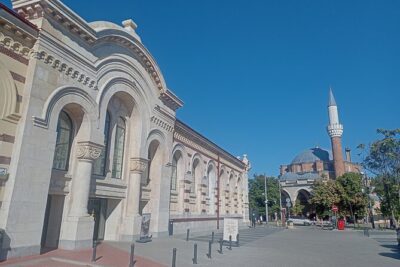
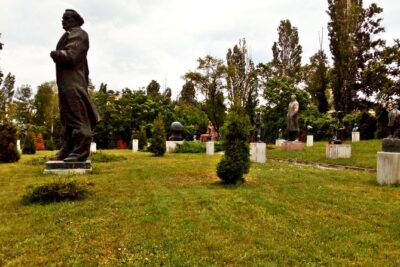
Timing: the 4:00 pm start and how to dress for it
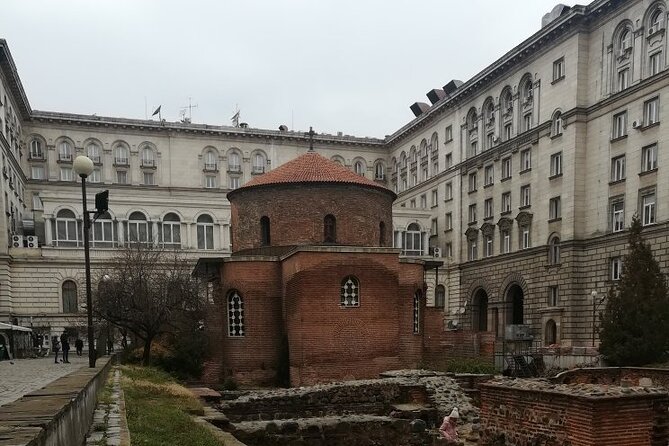
The tour starts at 4:00 pm and runs about 3 hours. In warm months, that’s a sweet spot for softer light and less midday heat. In winter, it can mean that the final third is more about stories than sharp sightseeing because daylight fades.
Based on how guides pace things, you’ll want to come ready for a real walk. Bring a warm layer, and if the forecast looks iffy, treat it like you might get cold and wet. It’s a city-center route, but weather still affects comfort.
If you’re with kids, you can bring them, but children must be accompanied by an adult. Service animals are allowed too, and the tour is described as doable for most people, though it is still walking.
Stop-by-stop: from Sofia City Court to the Palace of Justice area
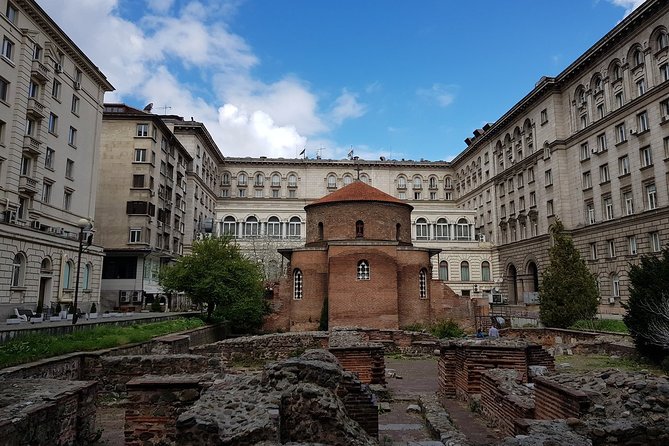
You begin in the Old City center near the Sofia City Court area. Even at the first stops, you’re not just looking at architecture. The guide uses these legal and civic spaces to set the tone: who held power, how the state operated, and how institutions supported the political system.
The early moments are usually where you get your framework for the rest of the walk. Think of it as a “history map” you carry in your head while you move. When you later see propaganda symbols, you’ll understand what they were trying to do and why these institutions mattered.
At the nearby Palace of Justice area, the guide keeps connecting the legal system to the communist state’s priorities. You get a clearer sense of how authority worked on paper and in everyday life, not just how monuments looked from the outside.
Saint Parascheva (St Petka) church: religion under pressure
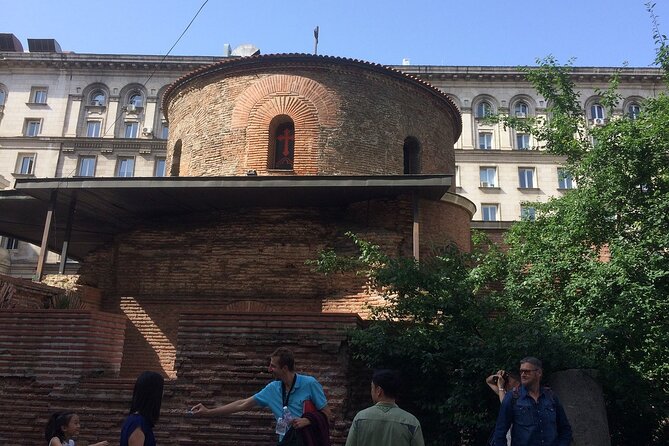
One stop that really changes the mood is the Ancient Orthodox Church of Saint Parascheva, known as the old St Petka church. This is a “hidden” feel moment on the route, and it’s here for a reason.
Communism in Bulgaria tried to control public life. Religion was not just spiritual. It was community, identity, and resistance in practice. By visiting this church, you see how faith kept existing even when the official system pushed back or limited religious expression.
This stop is short, but it lands. It’s the reminder that communism was never only about statues and parades. It was also about what people believed, practiced, and defended when the state tried to reshape society.
Presidency Building: the Soviet arrival story
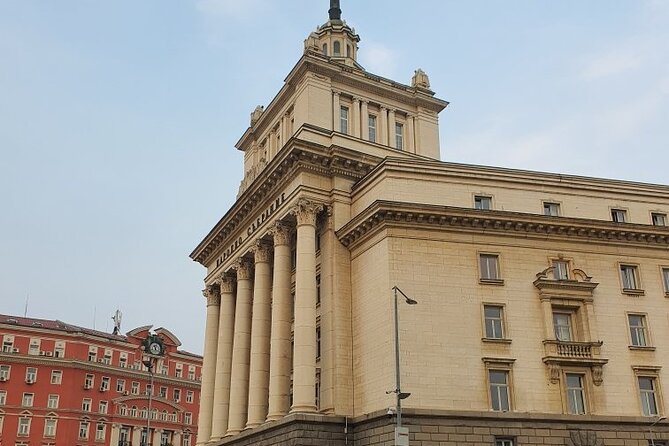
Next you move to the Presidency Building area, where the story turns to the arrival of the Soviet Army in Bulgaria. This is one of the moments where the tour connects Bulgaria’s fate to the wider Cold War machine.
You’ll learn what Soviet influence looked like on the ground and how that influence became part of Bulgaria’s political reality. It’s not just a war story either. The guide uses it to explain the shift from local governance toward a system aligned with Soviet priorities.
If you’ve ever wondered why communist-era symbols felt so strong in Bulgaria, this is where you start getting the answer.
Communist Party Headquarters and the Largo complex symbols
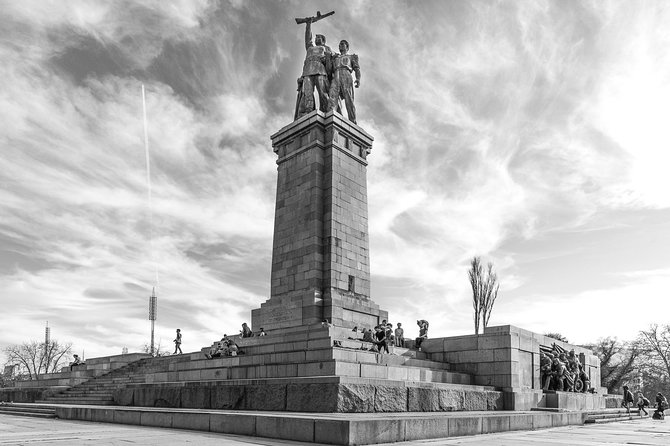
Then comes one of the most visually loaded parts of Sofia: the former Bulgarian Communist Party Headquarters, tied to the Largo complex story. This is where the tour gets specific about the symbolism people remember, like the Red Star and the Statue of Lenin.
The guide helps you read the space like a political message board. You’re not only learning what the symbols meant. You’re seeing how the city was organized to reinforce authority and control narratives about the past.
One of the best parts here is how guides often bring in personal perspective. On past tours with guides like Vasko and Nikola, the stories tend to connect the architecture and statues to real-life memories and impressions. That’s what turns “Lenin was here” into “here’s how it felt to live in a place built to send a message.”
City Garden and the Mausoleum story
In the City Garden, the focus shifts again from power displays to how the system tried to shape collective identity through public space. This stop centers on the story of the Mausoleum.
Even if you know little about the Cold War, you can understand the bigger idea quickly: the state wanted rituals, symbols, and physical reminders that life and history were moving in the approved direction.
This is one of those stops where the guide’s interpretation matters more than the sight itself. You’ll want to listen closely, because the “why” behind the monument matters as much as the “what.”
Soviet Army Monument: why it’s controversial, and why graffiti matters
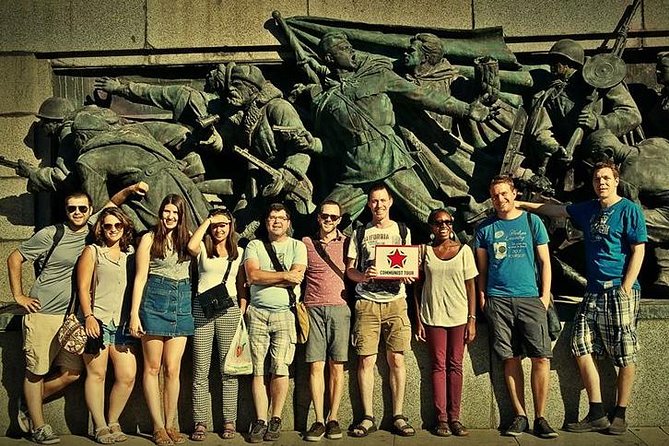
The Soviet Army Monument is one of Sofia’s most debated pieces, and the tour treats it that way. This is where you hear about uprisings against the communist regime, and you see how later generations kept challenging the meaning of the site.
You also get the afterlife of monuments. The tour mentions graffiti art, and that matters. It’s a visible layer of public opinion, not a museum label. In other words, the monument doesn’t just sit there unchanged. People keep talking back to it.
The guide walks you through the controversy without turning the tour into a shouting match. You’re encouraged to understand why the monument was powerful to some and offensive or painful to others.
And yes, this stop is longer at about 15 minutes, because it needs it.
National Palace of Culture (NDK): a communist megastructure with a second life
The National Palace of Culture (NDK) is the big one. It’s described as the biggest communist landmark in Sofia, and it also functions as a famous cultural hub. That combination is part of what makes this tour feel grounded.
You’re not just learning what communism built. You’re learning what survived and how it got reused. NDK becomes the bridge between past and present. The guide’s job here is to help you see the building as more than a style choice. It’s a physical reminder of political ambition and a stage for real events now.
This stop is relatively quick, around 10 minutes, but it can feel like a turning point. The story shifts toward how Bulgaria and the region changed after the communist era cracked.
The Berlin Wall finale at NDK park: how the story ends
The last stop is the Berlin Wall section next to it in NDK park. It wraps up with the story of how it all ended, tying Bulgaria’s transition to the broader collapse of the communist bloc.
This is a smart finale because it gives your brain a landing spot. After walking through buildings and symbols, you get the “so what happened next” version: how the Cold War ended, what replaced it, and why these places stopped meaning the same things.
You’ll likely feel this as a shift in tone. The earlier stops are heavier and more tangled. The finish is more about closure and cause and effect.
Who should book this tour, and who might skip it
This tour is a great fit if you want:
- A practical way to understand Bulgaria’s communist period through Sofia’s actual landmarks
- A guided route in English that covers a lot in about 3 hours
- A history walk that includes the religion angle plus politics and propaganda symbols
- A format that works well for first-timers who want a baseline, not just a sightseeing checklist
You might skip it if:
- You hate walking in colder or wet weather (it’s a city walk, and comfort matters)
- You’re visiting right around the winter solstice when darkness hits early, because the 4:00 pm start can limit what you see in the final stretch
Should you book this communist walking tour of Sofia?
I think you should book it if your goal is to make sense of the Cold War-era cityscape you’ll see anyway. For the price, you’re buying interpretation, not just “views.” The combination of strong landmark choices, fast pacing, and guides who bring the topic down to human scale makes it worth it.
If you want a quick, superficial tour, skip it. If you want to walk Sofia with better questions in your head, this is one of the best ways to do that.
FAQ
What is the price of the Communist Walking Tour of Sofia?
The price is $21.77 per person.
How long is the tour?
The tour lasts about 3 hours.
What time does the tour start?
The start time is 4:00 pm.
Where does the tour start and end?
It starts at Sofia City Court, Old City Center, bul. Vitosha 2, 1000 Sofia, Bulgaria. It ends at the National Palace of Culture (NDK), blvd. Bulgaria 1463 Sofia, next to a Berlin Wall section in the park.
Is the tour offered in English?
Yes. The tour is offered in English.
Do I need to buy separate tickets for the stops?
Admission tickets for the stops listed are free, and the tour is set up so you do not need separate paid entry for those points.
Is a mobile ticket used?
Yes, the tour uses a mobile ticket.
How big are the groups?
The maximum group size is 25 travelers.
Can children join?
Children must be accompanied by an adult.
What is the cancellation policy?
Free cancellation is available. You can cancel up to 24 hours in advance for a full refund.
Are service animals allowed and is it near public transportation?
Yes, service animals are allowed, and the tour is near public transportation.
More Bulgaria Reviews
- Rila Monastery and Boyana Church Full-Day Tour★ 4.5 · 918 reviews
- Sofia Escape Room – Teorema Rooms★ 5.0 · 895 reviews
- From Sofia: Rila Monastery & Boyana Church Day Tour★ 4.5 · 866 reviews
- Admission Ticket to the Museum of Illusions in Sofia★ 5.0 · 659 reviews
The Concrete Era, Told Straight
- Sofia Communist History 2-Hour Tour in a Classic Trabant★ 5.0 · 45 reviews
- Sofia Food & Tasting Tour with Communist-Era Tram Ride★ 5.0 · 35 reviews
- Sofia Under Communism: Self-Guided Puzzle Quest★ 5.0 · 9 reviews
- Self-guided Tour in the Museum of Socialist Art★ 4.0 · 4 reviews
Sofia on Foot, Other Routes
- Sofia Highlights 2 Hour Sightseeing Walking Tour★ 5.0 · 442 reviews
- Guided Walking Tour of Sofia★ 5.0 · 143 reviews
- Private city walking tour of Sofia★ 5.0 · 141 reviews
- Sofia Walking Private City Tour★ 5.0 · 127 reviews
Newer Bulgaria reviews, fresh off the desk
- Private Winter Day Trip to the Rila Mountain
★ 4.5 · 3 reviews - Transfer from Sofia to Stara Zagora
★ 5.0 · 3 reviews - Tour to Koprivshtitsa and the Buzludzha monument incl the Seuthes Thracian Tomb
★ 3.5 · 3 reviews - Catacomb Tour in Sofia guided by a Local
★ 4.5 · 3 reviews - Symbol of the Communism Buzludzha monument and the Rose valley
★ 5.0 · 3 reviews - Private 2 Hours Sofia Street Art and Graffiti Tour
★ 5.0 · 3 reviews
Sofia City & Walking Tours, compared.
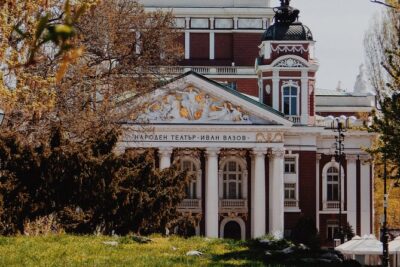 ★ 5.0Sofia Highlights 2 Hour Sightseeing Walking TourFrom $19442 reviews
 ★ 5.0Guided Walking Tour of SofiaFrom $48143 reviews
 ★ 5.0Private city walking tour of SofiaFrom $183141 reviews
 ★ 5.0Sofia Walking Private City TourFrom $84127 reviews
 ★ 5.0History and Heritage – Small Group City TourFrom $1984 reviews
 ★ 4.5Sofia by Night Panoramic Tour with Dinner and Folklore ShowFrom $16141 reviews
 ★ 4.5Private City Tour of SofiaFrom $3134 reviews
 ★ 4.5Sofia full day tourFrom $13823 reviews
Browse the lists this tour appears in