
Cold War ruins, real flight hardware. On this 10-hour Communist Heritage Tour from Plovdiv, you swap city streets for the surreal Buzludzha Monument, restored by volunteers after years of abandonment, and you end at Air Museum Plovdiv to get close to a MiG-21 cockpit. The guiding is also a big part of the value, with explanations that stay clear and patient, so the whole East Block story makes more sense.
What I like most are two very practical things: the time you get at Buzludzha and the hands-on aviation focus at the airport museum. One possible drawback is the schedule, it is a long day with lots of driving (starting at 8:00 am) and lunch is not included, so you’ll want to plan ahead for food.
In This Review
- Key highlights you will actually care about
- Why Buzludzha is more than a stop on a Communist tour
- Stop 1: Touring the Buzludzha Monument in a site built by soldiers and artisans
- Dimitrovgrad: a free walk that shows Communist planning at street level
- Air Museum Plovdiv: MiG-21 cockpit time and Cold War tech you can actually touch
- Pacing and comfort on a long 10-hour East Block day
- Price and value: what your $113.18 covers (and what it does not)
- Who this tour is best for, and who might want a different plan
- If you get Evo as your guide, expect a story-driven day
- Should you book this Communist Heritage Tour?
- FAQ
- What is the tour duration?
- How much does the tour cost?
- What time does the tour start?
- Is pickup available?
- How many travelers are in the group?
- What languages is the tour offered in?
- Are admission tickets included?
- Is lunch included?
- Is the tour dependent on weather?
- Are service animals allowed?
Key highlights you will actually care about
- A small group, up to 8 people, which makes it easier to ask questions and hear the guide without fighting for attention
- Buzludzha’s full backstory, including work that began in 1974 and a monument erected in 1981, then later abandonment after 1989
- Four hours at Buzludzha, enough time to take in the scale and restoration work, not just rush through photos
- Dimitrovgrad’s Communist-era town core, with parks and typical monumental buildings, and the time there is free
- MiG-21 cockpit access plus major helicopters, including the Mi-24 Hind, with interactive exhibits and a space program section
- Admission tickets included for Buzludzha and the Air Museum, so you do not have to budget extra at the door
More of the concrete era, told straight
Why Buzludzha is more than a stop on a Communist tour
Buzludzha is the kind of place that makes you stop talking. You see a huge structure built for an ideology, then you see the quieter reality of what happened after the system collapsed and people moved on.
That contrast is the whole point of this kind of day trip. I like tours where the sites are not treated like museum props. Here, the focus is on how the monument was made, what went wrong, and how it is being saved now.
You will also feel the geography. This is not a walk-only experience, you will spend meaningful time traveling out of Plovdiv, then back again, so the day has momentum rather than feeling like a checklist.
Stop 1: Touring the Buzludzha Monument in a site built by soldiers and artisans
You start early, because the day is long. Pickup happens from wherever you request in Plovdiv, then you head out toward Buzludzha with a guide and a comfortable air-conditioned vehicle.
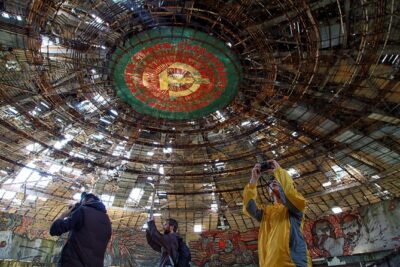
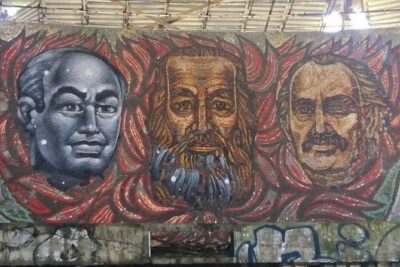
Once you reach the monument area, plan for a deep, slow visit, about 4 hours. Buzludzha was erected in 1981 to commemorate socialism, and the work began in 1974. The Bulgarian Army handled major units of the construction, with many artisans creating the large statues and murals.
After the government fell from power in 1989, the site was abandoned. Left open to vandalism for a long time, it became a kind of symbol of neglect, which is why its restoration matters so much.
What you will likely appreciate is that the restoration is framed as human effort, not magic. The monument is being brought back thanks to volunteers, artists, and experts from Bulgaria and other European countries. That gives you a real-world thread to follow, from propaganda build-up to post-1989 abandonment to modern community rebuilding.
What to watch for on-site
- The monument’s scale, especially the statue and mural work, since that is part of what the builders planned from the start
- The “before and after” feeling, because abandonment and restoration are both visible themes here
- How the guide connects architecture to the political mindset of the era
Possible drawback at this stop
You are spending time at a major, dramatic site rather than a gentle scenic viewpoint. If you want a light, breezy outing, this portion will feel weightier, because you are looking at how power gets built, then what happens when it stops.
Dimitrovgrad: a free walk that shows Communist planning at street level
After Buzludzha, the route goes down from the mountain and heads toward Dimitrovgrad, a town established during the Communist era. This is one of those stops that works well after a monument, because it shifts the story from monumental statements to daily-life space.
You get about 3 hours here, and there is no admission ticket required. In the center, you will walk through an atmosphere that still reflects the era: parks, and typical Communist monumental buildings.
This is where the tour becomes more than political trivia. It is about seeing how a system shaped real neighborhoods, not just big public projects. If you have ever wondered why Communist-era cities look the way they do, Dimitrovgrad helps you answer that with your eyes.
How to get more out of Dimitrovgrad
- Take your time with the parks and open areas, because they help show how planning shaped everyday movement
- Let the monumental buildings register in context, after the massive symbolism you saw at Buzludzha
Why this stop is valuable
A lot of “heritage” tours only do the dramatic headline sites. This one adds a town walk for balance, so your brain can compare ideology built into architecture versus ideology built into city layout.


Air Museum Plovdiv: MiG-21 cockpit time and Cold War tech you can actually touch
The day’s final major stop is the Museum of Aviation, part of the grounds at Plovdiv International Airport. You will spend about 3 hours here, and admission is included.
The museum houses a wide range of aircrafts, including fighter jets, helicopters, and transport planes. The standout for many people is the MiG-21, described as a staple of the Bulgarian Air Force during the Cold War.
Here is a big difference between seeing a plane behind glass and experiencing aviation history up close: visitors can climb inside the cockpit. You get a closer feel for what it was like to sit in one of those powerful machines, even if you are not flying it.
You will also see helicopters, including the Mi-24 Hind attack helicopter. It is the kind of aircraft that makes you understand why aviation mattered so much during the East Block era. The museum does not treat these machines as just war trophies. It frames them as part of Bulgaria’s aviation story and its role in the wider world.
Interactive exhibits and displays add a second layer. They provide information about the history of aviation in Bulgaria and the role of the Bulgarian Air Force in world history. There is also an exhibition dedicated to the space program, which helps widen the story beyond aircraft alone.
Practical expectation
Because this is on airport grounds, you can expect an atmosphere that feels connected to real aviation rather than a distant display hall. Even if you are not an aviation nerd, the combination of scale and access to the cockpit makes it memorable.
Pacing and comfort on a long 10-hour East Block day
This tour is about a 10-hour day, and you start at 8:00 am. That means you are not doing just one attraction. You are doing three distinct worlds: a socialist monument, a Communist-era town center, and an aviation museum at the airport.
There is a fair amount of driving too. You should expect a couple of hours on the road before reaching Buzludzha, then additional travel between stops, plus the drive back into Plovdiv afterward.
The comfort factor helps. The tour uses an air-conditioned vehicle, and the group limit is small, up to 8 travelers. That matters more than people think, because it reduces waiting and makes the guide’s explanations easier to follow.
The company also offers pickup, group discounts, and a mobile ticket. Pickup means you do not have to coordinate transport on your own, and the drop-off is flexible, with the guide dropping you anywhere you like in the city after the airport museum.
Price and value: what your $113.18 covers (and what it does not)
At $113.18 per person, you are paying for a full-day, guided, ticketed route with transportation included. The listed inclusions cover an air-conditioned vehicle and all fees and taxes.
On top of that, admission tickets are included for the two most expensive ticketed components: Buzludzha Monument and Air Museum Plovdiv. Dimitrovgrad is free for the time you spend in the center, so most of your “pay at the door” anxiety is removed.
That is a real value point for this style of trip. When you add up gas or taxi costs for multiple sites plus separate museum tickets, the total can creep up fast.
The clear non-inclusion is lunch. Plan for it. Since the day is long and ends in Plovdiv, you will likely want to grab something either during the day breaks or after your drop-off. If you skip planning, you may find yourself making an expensive or rushed food decision later.
One more value note
The best-rated part of this tour is the guide. When the guiding is strong, you get context that turns a monument and aircraft displays into a story you remember, instead of three separate photo stops.
Who this tour is best for, and who might want a different plan
This is ideal if you like understanding places through how they were built and why they were abandoned or preserved. You will probably enjoy it most if you are interested in Cold War context, Eastern European architecture, or aviation history.
It is also a good fit for people who want a structured day without having to plan logistics. Pickup, small group size, included admissions, and drop-off in the city all reduce friction.
Consider a different option if
You want a short half-day with minimal driving. This is a long day by design, with a lot of road time. Also, the tour requires good weather. If you are traveling when conditions are uncertain, you might prefer a flexible activity.
If you get Evo as your guide, expect a story-driven day
One name you’ll hear associated with the best experience on this tour is Evo. The standout traits credited to Evo are strong knowledge across the monuments and Bulgaria, plus an ability to explain in a way that feels open and patient.
That matters because this tour includes heavy themes. If you want to understand what you are looking at, you need more than a basic description. You want someone who can connect facts like construction dates and restoration efforts to what those things meant at the time.
When a guide can do that, your tour becomes less about checking boxes and more about seeing cause and effect.
Should you book this Communist Heritage Tour?
Book it if you want a compact way to see two major sides of Bulgaria’s 20th-century story, socialist-era monument culture and Cold War-era aviation, with a real town walk that keeps it grounded. The included tickets, small group size, and guided pacing make it a good value for a full-day outing.
Skip it if long driving days are a problem for you, or if you prefer having lunch included or a schedule that feels lighter. If you do book, plan for food, dress for the outdoor nature of the stops, and go in ready to see how ideology shows up in architecture and machines.
FAQ
What is the tour duration?
The tour lasts about 10 hours.
How much does the tour cost?
The price is $113.18 per person.
What time does the tour start?
It starts at 8:00 am.
Is pickup available?
Yes. Pickup is offered from locations you request in Plovdiv.
How many travelers are in the group?
The tour has a maximum of 8 travelers.
What languages is the tour offered in?
It is offered in English.
Are admission tickets included?
Admission tickets are included for Buzludzha Monument and the Air Museum Plovdiv. Dimitrovgrad is free for the visit.
Is lunch included?
No, lunch is not included.
Is the tour dependent on weather?
Yes. The tour requires good weather. If it is canceled due to poor weather, you will be offered a different date or a full refund.
Are service animals allowed?
Yes, service animals are allowed.
More Tours Around Bulgaria
- Private city walking tour of Plovdiv★ 5.0 · 65 reviews
- Food Walk: Bulgarian Food and Culture Tour in Plovdiv★ 5.0 · 35 reviews
- Wonderful Bridges-Bachkovo Monastery-Assen’s Fortress – day tour from Plovdiv★ 5.0 · 32 reviews
- Plovdiv guided walking tour★ 5.0 · 31 reviews
More Bulgaria Reviews
- Private city walking tour of Plovdiv★ 5.0 · 65 reviews
- Food Walk: Bulgarian Food and Culture Tour in Plovdiv★ 5.0 · 35 reviews
- Wonderful Bridges-Bachkovo Monastery-Assen’s Fortress – day tour from Plovdiv★ 5.0 · 32 reviews
- Plovdiv guided walking tour★ 5.0 · 31 reviews
The Concrete Era, Told Straight
- A Day trip to the Thracian Kings, The Valley of Roses & Buzludzha★ 5.0 · 6 reviews
Newer Bulgaria reviews, fresh off the desk
- Transfer Plovdiv to Sofia airport/city with a car 3+1
★ 5.0 · 3 reviews - Private Buggy Experience All Seasons in Pamporovo
★ 5.0 · 3 reviews - Plovdiv Roman Sights Self-Guided
★ 4.5 · 3 reviews - Private Cascades Waterfall Horseback Riding Tour from Smolyan
★ 5.0 · 4 reviews - Koprivshtitsa – private day tour from Plovdiv
★ 5.0 · 4 reviews - Hiking to Eagle’s Eye and Devil’s Throat Cave
★ 5.0 · 4 reviews
Communist-Era Bulgaria Tours, compared.
 ★ 5.0Communist Walking Tour of SofiaFrom $21690 reviews
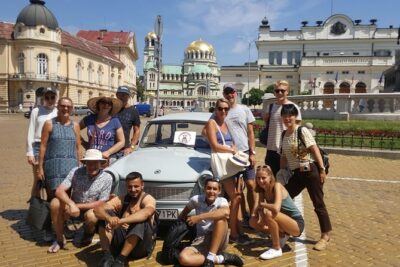 ★ 5.0Sofia Communist History 2-Hour Tour in a Classic TrabantFrom $24045 reviews
 ★ 5.0Sofia Food & Tasting Tour with Communist-Era Tram RideFrom $9135 reviews
 ★ 5.0Sofia Under Communism: Self-Guided Puzzle QuestFrom $69 reviews
 ★ 5.0A Day trip to the Thracian Kings, The Valley of Roses & BuzludzhaFrom $1076 reviews
 ★ 5.0Explore Bulgaria’s COMMUNISM Era–Todor Zhivkov DayTrip from SofiaFrom $1094 reviews
 ★ 4.0Self-guided Tour in the Museum of Socialist ArtFrom $84 reviews
 ★ 5.0Symbol of the Communism Buzludzha monument and the Rose valleyFrom $2313 reviews
Browse the lists this tour appears in