
REVIEW · TOURS
Skip the Line: Medieval Tuida Fortress tours
A fortress you can play inside. Tuida Fortress in Sliven brings Roman and Bulgarian layers together with on-site activities like archery and medieval dress if you book them.
I especially like how the ruins are explained in a way that makes the place feel lived-in, not just photographed. I also like that you get both an on-site person (when you choose guiding) and an e-guide to keep your head straight as you walk.
One possible drawback, though, is that from the outside it can look modest, and the walk can feel less cared-for if you arrive without a proper guide, especially around signage and paths.
In This Review
- Key highlights worth building your day around
- Tuida Fortress in Sliven: more than a few old walls
- The one-day flow and what to expect on arrival
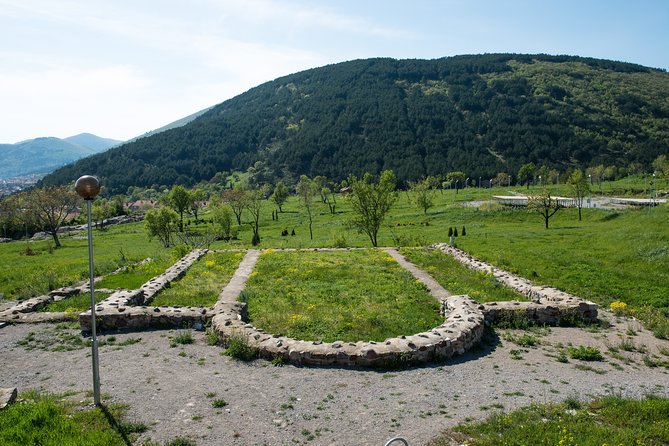
- Inside Tuida: Roman rebuilds, Bulgarian reuse, and a real sense of place
- The Early Christian basilica and the unique baptistery
- Archaeology details that make the visit feel grounded
- Archery and medieval dress options: why they actually add value
- Photos, the e-guide, and keeping your story straight
- Price and value: $8.16 for a full historical afternoon
- When Tuida feels perfect, and when it might frustrate you
- Who should book this tour?
- Should you book Skip the Line: Medieval Tuida Fortress tours?
- FAQ
- Where is the Medieval Tuida Fortress tour located?
- How long does the experience take?
- How much does the tour cost?
- Is the tour offered in English?
- Do I get a mobile ticket, and when do I receive confirmation?
- Is admission to Tuida Fortress free?
- What is included in the tour if I book the activity options?
- What is not included?
- Can I cancel for a full refund?
Key highlights worth building your day around
- Tuida’s multi-era story runs from Roman rebuilding to Bulgarian reuse, then later destruction.
- Hands-on medieval options like archery and dressing up (only if you book that option).
- Baptistery with murals and mosaics, plus an Early Christian basilica you can actually picture in context.
- Marble pedestals to Apollo and Zeus, and other standout inscribed elements that add meaning to the stones.
- A site where the inside matters more than the outside, especially with an English guide.
- Good small-plan value for the money, since admission is listed as free.
Still weighing up the options? These Bulgaria trips keep coming back up.
- Non Touristic Half Day Camel Safari Thar Desert Sunset★ 5.0 · 14 reviews
- Skip the Line: Medieval Tuida Fortress tours★ 4.5 · 6 reviews
Tuida Fortress in Sliven: more than a few old walls
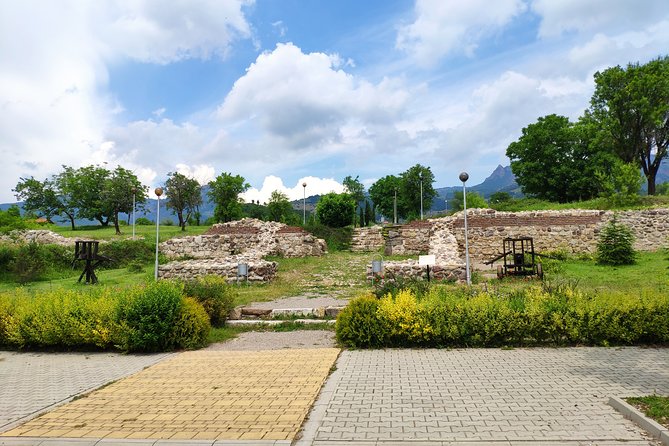
Tuida Fortress is in Sliven, Bulgaria, and it has that rare feel where the stones have been used again and again. First, it survived the Goth invasion of 378 AD, only to fall later during the invasions of the Huns in the 5th century. It was rebuilt during the reign of Roman Emperor Anastasius I, and later it was destroyed around 598 to 599 AD, likely during attacks by Avars and Slavs.
What I like about Tuida is that the story does not stop at one empire. Over time, the area south of the Balkan Mountains became part of the First Bulgarian Empire, around the early 8th century under Khan Tervel, after he helped Justinian II regain his throne in Constantinople. That shift matters because it turns the fortress from a one-time Roman project into a longer Bulgarian settlement with real built additions.
If you want a monument that works for both history nerds and people who just want a great time, this is it. Even the archaeological details you learn about, like a lead seal linked to Bulgarian Knyaz Boris I Mihail, help you understand that this was not just a fortress, it was an administrative and religious place too.
The one-day flow and what to expect on arrival
This is a one-day experience, offered in English, with a maximum group size of 50 people. It uses a mobile ticket, and you should receive confirmation at the time of booking. In practice, that tends to mean less fuss when you arrive, and you can spend your energy on the walking and the explanations.
You’ll also want to treat this as an outdoors-and-ruins day. Wear comfortable shoes. The site is archaeological, so you will be dealing with uneven surfaces and areas where nature is allowed to grow. That is part of what makes ruins feel real, but it can also make directions and signage easier to miss.
Because guiding is optional (and included only if you book it), my best advice is simple: if you want the site to feel “wow,” choose the guided option. When you do, the fortress stops being a collection of walls and becomes a timeline you can follow.
Inside Tuida: Roman rebuilds, Bulgarian reuse, and a real sense of place
Your main focus is Tuida Fortress, and the biggest win is how clearly the site’s layers connect. The fortress avoided destruction during the Goth invasion of 378 AD, but it was destroyed during the Huns in the 5th century. When Roman authorities rebuilt it under Emperor Anastasius I, they preserved earlier architecture and also enhanced it, which you can think of as a kind of architectural editing job, not a brand-new reset.
Later, Bulgarians rebuilt key parts of the fortress, including the walls and the aqueduct. They also put new buildings inside, with marble slabs produced by stone cutters in Veliki Preslav, the Bulgarian capital called Great Preslav in English. Even small details you might hear about, like bricks bearing an Ancient Bulgar sign, help explain why the fortress reads as a Bulgarian settlement, not only a Roman one.
There is also a religious angle that makes the fortress feel busy in the old days. Written sources indicate Tuida had a bishop from the 4th century AD onward. That sets up the next part of the experience, because the fortress is not only defensive, it is also a place where worship was organized and displayed through architecture.
The Early Christian basilica and the unique baptistery
This is where Tuida gets genuinely special for me. The site contains a cult complex used between the 4th and 13th centuries, including a three-nave one-apse Early Christian basilica. What makes the complex stand out is a unique baptistery decorated with murals and mosaics.
If you have ever looked at mosaics and wished you knew where to stand or what to notice, this is the kind of stop where the explanation helps your eyes work. You do not just look, you learn how to interpret what you are seeing, even when you are standing in a ruin.
There are also important markers tied to the fortress name. Two marble pedestals dedicated to gods Apollo and Zeus contain the name of the fortress as Tuida or Suida, which is also known in written sources as Tsoida. That means the stone has identity, not just ornament. It is a small thing, but it helps you feel how names, religion, and authority all got physically stamped into the site.
And because you may hear about inscriptions and dedications, you can connect the place to real functions, like a 3rd century AD inscription describing the settlement as a market place. So yes, you get the battlefield and fortress angle, but you also get the everyday angle: trade, belief, and community.
Archaeology details that make the visit feel grounded
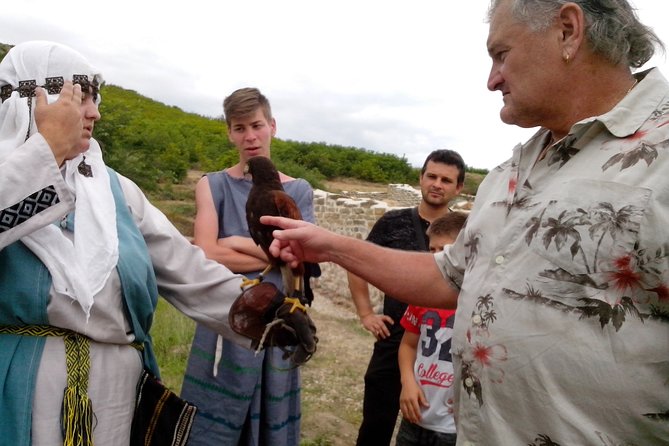
Tuida was excavated starting in 1982, with renewed work in 2004. That matters because active excavation usually means better interpretation, not only random digging. You may hear about finds that sound like a textbook list, but they help you picture daily life.
For example, finds include iron tools, ceramic vessels, ornaments, and coins, plus bones from 14 species of wild and domesticated birds, such as Bonelli’s eagle, western capercaillie, great bustard, and common pheasant. Even if you never see every specimen, learning that the site records animal life tells you something practical: people here managed land and food, not just soldiers and bishops.
You may also hear about fortress towers and gates, building remains, and the overall size of the fortified area, about 40 decares, roughly 10 acres. Outside the walls, a larger basilica was found, suggesting the settlement was not confined to the fortified space. This is one of those details that makes the fortress feel like a center of gravity, with buildings spreading beyond the immediate defense line.
Archery and medieval dress options: why they actually add value
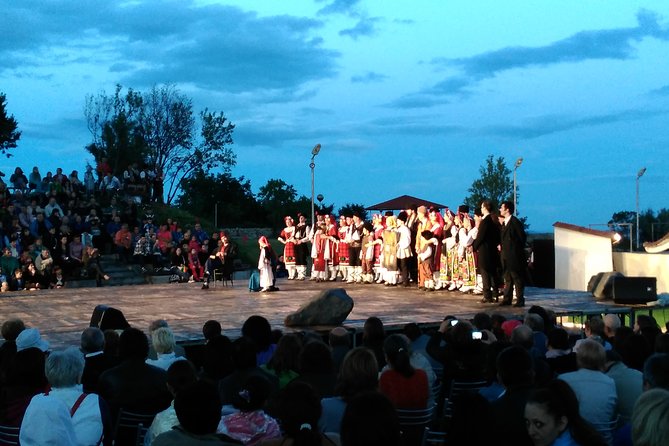
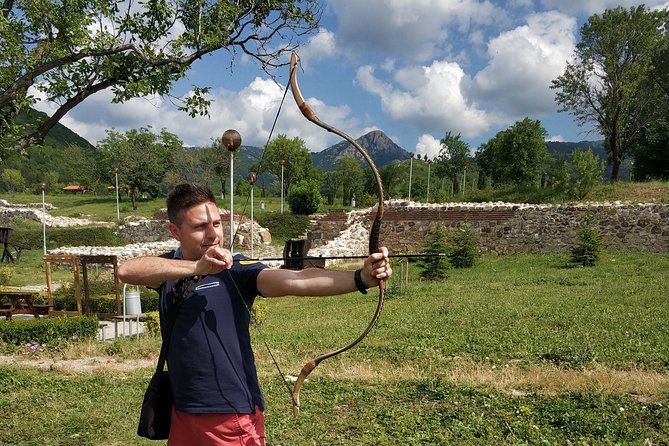
The included activities can be a big part of why people enjoy this day. If you book the option, you can join archery and medieval dress. The point is not to turn a museum into a theme park. It is to help your brain translate what you are seeing.
When you dress in medieval style or handle archery equipment, you do not magically understand 5th-century life. But you do start thinking about posture, armor layers, and movement through space. That makes the fortress architecture feel more like real shelter rather than empty stone.
If you are visiting with kids, this kind of activity usually lands well, because it gives everyone a job to do besides just walking and looking. If you are visiting as a couple or solo, it still works, but you may prefer the quiet focus of a guided walk, then add the activity afterward.
Photos, the e-guide, and keeping your story straight
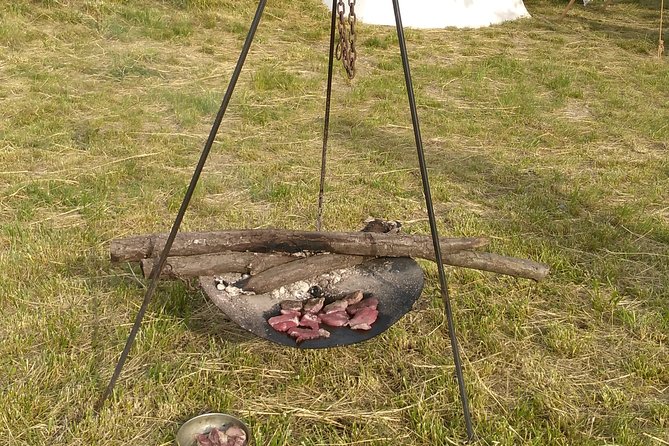
The experience includes taking photos, and it also includes an e-guide. That combo matters because Tuida has a lot going on: basilica architecture, baptistery details, pedestals dedicated to Apollo and Zeus, and multiple historical phases.
Without some kind of guide, ruins can blur together. With an e-guide and (optionally) a real person explaining what you are looking at, it becomes easier to remember specific things like names tied to inscriptions, or why certain buildings belong to certain centuries.
My practical tip: use your phone to take a few steady reference shots, wide-angle first, then close-ups on any inscriptions or pedestals you can read. Later, match them to what the e-guide tells you. That keeps the day from turning into a pile of random images.
Price and value: $8.16 for a full historical afternoon

The price listed is $8.16 per person, and it is hard to ignore how low that is for an organized experience. Admission is listed as free, which suggests you are paying mainly for the interpretation and on-site extras, not for a ticket just to stand near walls.
That value gets even better if you choose the options that add activities and guidance. Archery and medieval dress sound fun, but they also give structure to the visit, which tends to make people feel like they got their money’s worth.
What you should budget for: food, drinks, and personal expenses are not included. Since this is a one-day outing, plan to eat before or after your visit. Bring water if you are sensitive to heat, because outdoor walking plus summer sun can wear you down fast.
Also, keep your expectations realistic. Even with a guide, this is still ruins. You are not visiting a fully roofed complex. You are visiting a site that survives partly because it is still waiting to be fully interpreted.
When Tuida feels perfect, and when it might frustrate you
I think this is one of the best options for Sliven if you want a day that mixes history with action. The fortress can work as a family outing thanks to archery and medieval games. It also works for anyone who likes religious and archaeological sites, because the baptistery and basilica focus gives it a distinct identity.
Now the caution. One downside that can spoil the day is arriving without a guide and expecting a “wow” exterior experience. The outside may look underwhelming, and if signs are hard to read due to sun bleaching or wear, you can feel like you are walking through guesswork.
The other practical frustration is walking comfort. Since the site is archaeological and outdoors, you may find that paths get overgrown in spots, which can make it harder to move smoothly. Comfortable shoes help a lot, and a guided visit helps you understand where to focus.
Who should book this tour?
I would book this if:
- You want an English-friendly visit to a fortress site that is meaningful because of what is inside.
- You like the idea of medieval activities, like archery and dressing up, and you want that fun to support the history.
- You are short on time in Sliven and want a structured visit rather than wandering alone.
I would skip or rethink it if:
- You only want a quick photo stop and you dislike walking around ruins without a clear narrative.
- You hate uneven ground or you are expecting a polished museum experience.
Should you book Skip the Line: Medieval Tuida Fortress tours?
If you are in Sliven for even part of a day, I think this is a smart pick, mainly because the site gets explained and because the activities are optional add-ons that can make the ruins feel more memorable. The price is low, admission is listed as free, and the English e-guide plus optional guiding mean you can shape the experience to your style.
My call: book it, and if you care about getting the most out of the baptistery, the Apollo and Zeus pedestals, and the basilica complex, strongly consider adding the guiding option. Then plan a small buffer for walking and wear shoes you trust.
FAQ
Where is the Medieval Tuida Fortress tour located?
It takes place in Sliven, Bulgaria.
How long does the experience take?
It is listed as approximately 1 day.
How much does the tour cost?
The price is $8.16 per person.
Is the tour offered in English?
Yes, it is offered in English.
Do I get a mobile ticket, and when do I receive confirmation?
Yes, it uses a mobile ticket, and you receive confirmation at the time of booking.
Is admission to Tuida Fortress free?
Admission Ticket Free is listed in the information provided.
What is included in the tour if I book the activity options?
You can get archery and medieval dresses if you book that option, guiding if you book it, taking photos, and an e-guide.
What is not included?
Food, drinks, and personal expenses are not included.
Can I cancel for a full refund?
Yes, you can cancel up to 24 hours in advance for a full refund.
More Bulgaria Reviews
- Non Touristic Half Day Camel Safari Thar Desert Sunset★ 5.0 · 14 reviews
- Private Access Rose Festival Kazanlak 05-07.06.2025★ 4.5 · 6 reviews
Newer Bulgaria reviews, fresh off the desk
- Skip the Line: Medieval Tuida Fortress tours
★ 4.5 · 6 reviews - Non Touristic Half Day Camel Safari Thar Desert Sunset
★ 5.0 · 14 reviews
Tours, compared.
 ★ 4.5Rila Monastery and Boyana Church Full-Day TourFrom $24918 reviews
 ★ 4.5From Sofia: Rila Monastery & Boyana Church Day TourFrom $24866 reviews
 ★ 5.0Communist Walking Tour of SofiaFrom $21690 reviews
 ★ 5.0Sofia Highlights 2 Hour Sightseeing Walking TourFrom $19442 reviews
 ★ 4.5Day tour to Skopje, North Macedonia – Small GroupFrom $95431 reviews
 ★ 4.5Sofia Pub Crawl Tour of The Hidden Unique BarsFrom $24284 reviews
 ★ 4.5Plovdiv Small Group Full Day Guided Tour from SofiaFrom $22235 reviews
 ★ 5.0Tour to Lovech, Devetaki cave & Krushuna waterfallsFrom $114167 reviews