
REVIEW · SOFIA CITY & WALKING TOURS
Sofia Hidden Gems: Small-Group Walking Tour with Tram Ride
Sofia has layers, and this walk shows them fast. You hit ancient Serdica sites, big-name churches, and short museum stops, all stitched together with real city streets and a quick tram or metro hop. I love that it gives you a clear Sofia map in only a few hours, so later you can explore on your own with less guesswork.
Two things I especially like: the pace is manageable for a 2 to 3 hour outing, and the group stays small, with a maximum of 10 people. Also, the guide, Peter, is patient and energetic, and he answers questions without rushing you.
One thing to consider: many stops are brief, usually around 5 to 10 minutes, so if you want long, slow viewing inside every site, you might feel a bit time-pressed.
In This Review
- Key highlights worth planning around
- A 2 to 3 Hour Sofia Walk That Starts With Getting Your Bearings
- Small-Group Pace, Peter the Guide, and a Tram Hop That Saves Your Legs
- Saint Sofia Church and the Council of Serdica, Where Sofia’s Story Begins
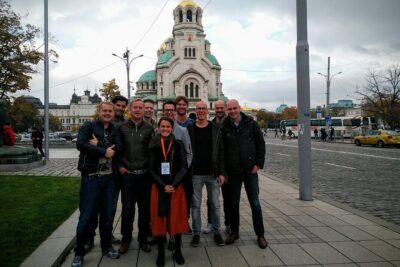
- Alexander Nevsky Cathedral, Neo-Byzantine Scale, and the Sofia “Wow” Moment
- Kvadrat 500 and Sofia’s Modern Art Energy, Without the Pressure of a Long Museum Day
- The National Library and Sofia University, Plus Why Indoors Matters on a Short Trip
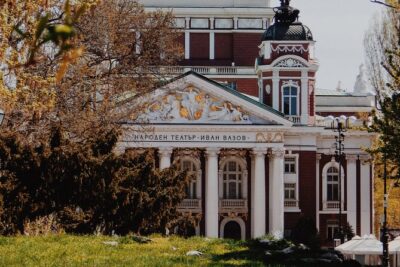
- National Theatre, Largo, and Sofia’s Early 1900s Civic Ambition
- Rotunda St George and Ancient Serdica, Roman Roots Under Modern Streets
- Central Mineral Baths, The Central Sofia Synagogue, and Banya Bashi Mosque: Ottoman and Vienna in One Route
- West Gate of Serdica and Zhenski Pazar, Ending Near Central Market Hall
- Price and Value: Is 45.66 Worth It for a Sofia Walking Tour?
- Should You Book This Sofia Old Town Walk?
- FAQ
- What is the duration of the Sofia walking tour with tram ride?
- How much does the tour cost?
- Is the tour in English?
- Does the tour include public transportation?
- Where do you start and where does it end?
- How many people are in the group?
- Are there free admission stops included?
Key highlights worth planning around
- Small group size (max 10), which makes questions actually work in real time
- Indoor visits included at places like the university and national library
- A tram or metro short ride with a city transport card, so you do not walk every step
- Ancient Serdica sites + Ottoman-era architecture in one route
- Peter’s bonus stops and helpful attitude, including practical time for questions and souvenirs
Another way round Sofia on foot
- Communist Walking Tour of Sofia★ 5.0 · 690 reviews
- Sofia Highlights 2 Hour Sightseeing Walking Tour★ 5.0 · 442 reviews
- Guided Walking Tour of Sofia★ 5.0 · 143 reviews
- Private city walking tour of Sofia★ 5.0 · 141 reviews
A 2 to 3 Hour Sofia Walk That Starts With Getting Your Bearings
This tour is basically a fast orientation to central Sofia, without the “tour-bus stops” feeling. You start at Saint Sofia Church in the old city center, then you work your way through some of the most meaningful parts of Sofia’s timeline, from Roman-era remains to Ottoman architecture to 20th century civic buildings.
The time breakdown matters. Expect lots of quick, focused looks rather than one long “wander and stare” museum session. That is a good deal if you are only in Sofia for a short stay or if you like context more than standing in front of one painting for 45 minutes.
If you hate rushing, plan to come back later to the places that pull you in. This tour is about choosing your favorites. Then you can do the slow version on your own.
Small-Group Pace, Peter the Guide, and a Tram Hop That Saves Your Legs
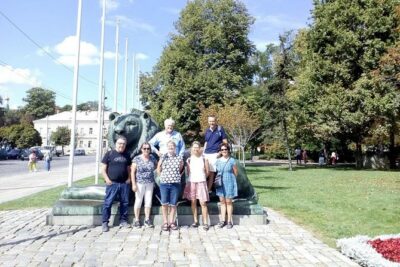
You are not packed into a big crowd. The tour caps at 10 travelers, and the guide experience is the kind you notice quickly: Peter is described as patient and energetic, and he really works to make the walk feel conversational.
You also get a transport card that covers a short tram or metro ride. That is smart for Sofia, where some sights are close enough to walk but not worth turning your whole day into a stair marathon.
The guide also adds value beyond the route. In real life, that can mean bonus location suggestions and extra time for questions. One standout detail from the experience feedback is that Peter handled practical moments calmly, even waiting while people bought souvenirs and offering water. Those little touches make the tour feel human, not robotic.
Practical tip: wear comfortable shoes. You are on your feet through cobbled old streets, and you will be happier if you plan for standing time at multiple stops. Also, sunscreen comes up for a reason.
Saint Sofia Church and the Council of Serdica, Where Sofia’s Story Begins
The tour’s first stop is Saint Sofia Church, tied to the earliest layers of Sofia’s identity. The church dates back to the fourth century, and that is already a big clue you are not just looking at architecture, you are looking at a long-running spiritual and civic center.
What makes this start memorable is the connection to the Council of Serdica. In the predecessor building, a council took place most probably in 343 and involved 316 bishops. Even if you are not a church-architecture specialist, that kind of anchor turns the building into something bigger than a landmark.
What you’ll likely enjoy here is the way the guide frames Sofia’s change over time. Serdika, then Sofia, then modern Sofia, all pulling on the same ground. The church is also listed as free admission, which is a nice way to begin without feeling you are spending your way through the highlights.
If there is a drawback, it is that you only get a brief window here. In other words, it is a strong opener, but not a deep dive. Save deeper reading for later if this era hooks you.
More of Bulgaria covered on foot


Alexander Nevsky Cathedral, Neo-Byzantine Scale, and the Sofia “Wow” Moment
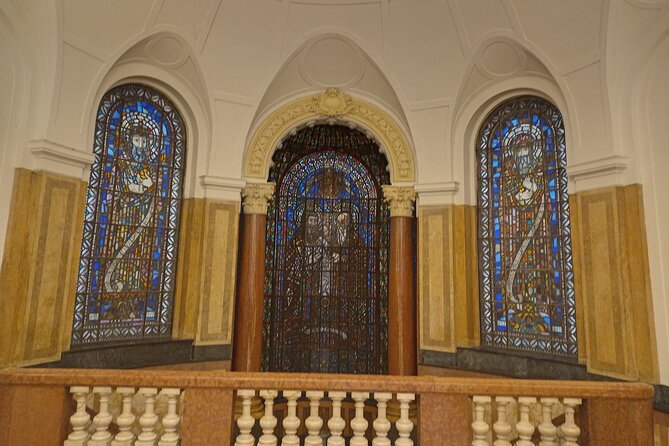
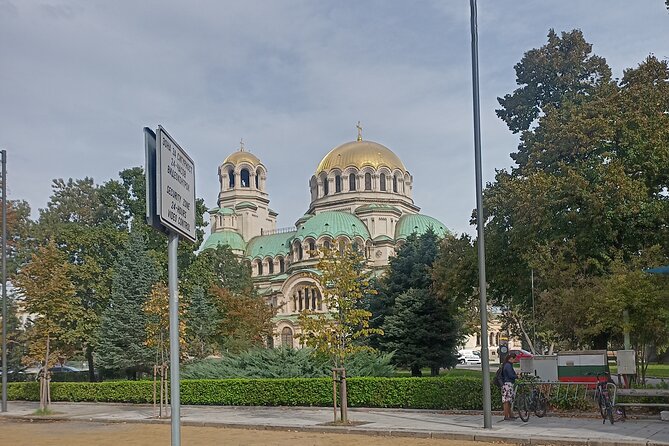
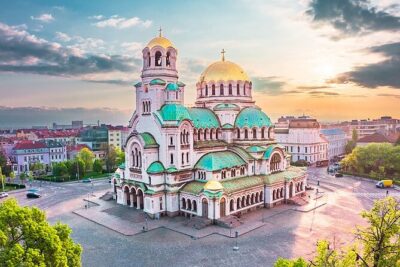
Next comes St. Alexander Nevski Cathedral, and yes, it has that “you feel it even before you understand it” scale. It is built in Neo-Byzantine style and is listed as one of the 50 largest Christian church buildings by volume in the world.
This is a great stop for first-time visitors because it gives you a visual reference point. Once you see it, you start to notice Sofia’s relationship with religious art, iconography, and grand civic design elsewhere in the city.
Like the first church, this stop is also noted as free admission, so you can keep your budget under control. The visit time is short (around 10 minutes), which means you should come ready to take quick photos and soak in the overall impression rather than expecting full “museum pacing” inside.
Consider it this way: the cathedral is your big emotional marker, and then you move on to more specialized, different types of culture.
Kvadrat 500 and Sofia’s Modern Art Energy, Without the Pressure of a Long Museum Day
Then you shift gears with the National Gallery’s Kvadrat 500, the newest and largest building opened on 25 May 2015. This is where the tour adds variety, because up to this point you have been anchored in older religious and historic sites.
Kvadrat 500 is not a tiny gallery. It houses about 1,700 artworks across 28 halls on four levels, representing Bulgarian art starting from the 1890s and a large foreign collection formed mainly in the 1980s. You also get signals of global range, with exhibits described from Asia, Africa, and America.
The practical reason I like including Kvadrat 500 on a short tour is simple: you get a taste of Sofia’s modern cultural identity without burning half a day. If you later want a full museum day, you now know what kind of building and vibe you prefer.
One thing to watch: museum halls can be busy and visually dense. With a limited visit time, you may not get to everything. Treat this stop like a sampler, then return later if a wing or time period catches your eye.
The National Library and Sofia University, Plus Why Indoors Matters on a Short Trip
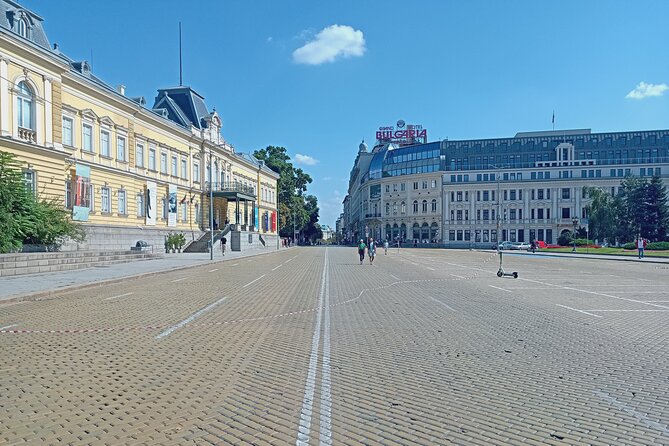
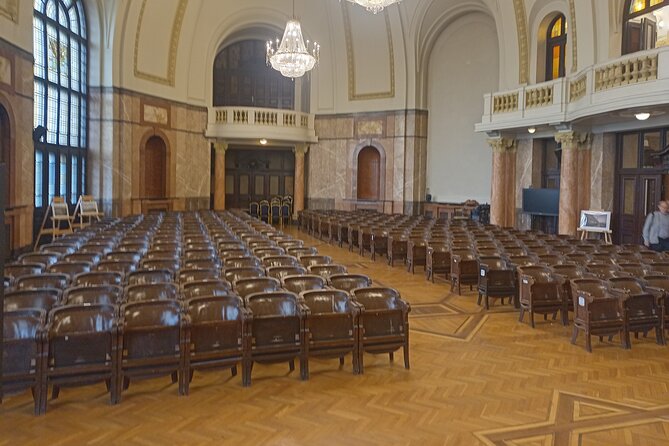
Two of the most rewarding parts of the route are the indoor visits: the St. Cyril and St. Methodius National Library and Sofia University St. Kliment Ohridski.
At the national library, the numbers are big enough to change your sense of scale. The collection is listed at nearly 8.5 million documents, and it receives about 70,000 publications every year. This stop helps you understand that Sofia is not just monuments and churches, it is also a living knowledge center.
Then you go to the university, described as the first higher educational institution in Bulgaria. The information given connects it to earlier educational traditions going back to the second half of the 9th century, and then to the Bulgarian Renaissance ideas for higher education, with growth after Liberation in 1878.
You will also see architectural context tied to the university building described as neo-Renaissance, designed in 1884 to 1886 by Constantin Yovanovic, who studied in Vienna and Switzerland. Even if you do not memorize architectural facts, it is the kind of story that makes your later street-walking smarter, because you start recognizing what kind of era you are standing in.
Both visits are noted as free admission, and each time slot is around 10 minutes. That is ideal if you are trying to cover a lot without turning your feet into sandpaper.
National Theatre, Largo, and Sofia’s Early 1900s Civic Ambition
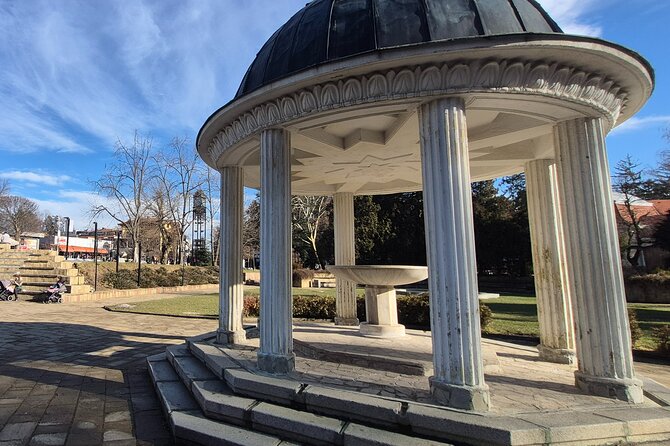
After the library and university, the tour leans into the city’s civic face with the National Theatre and the Largo area.
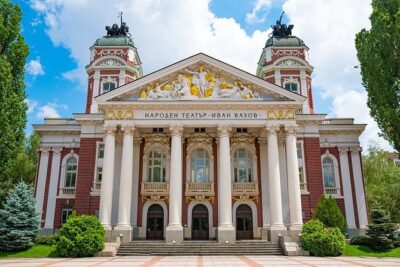
The theatre story is the kind that makes Sofia feel international. Construction finished in 1906, and the opening ceremony was held on 3 January 1907. The architects named here are Ferdinand Fellner and Hermann Helmer, well-known designers in the early 20th century, and the style described is Art Nouveau. Even the auditorium details are specific: seating for 848, with the plafond and walls painted by Rudolf Fuchs from Vienna.
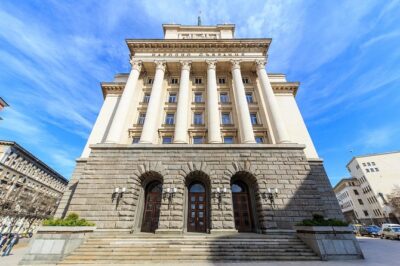
Then you get Largo, described as an architectural ensemble of three Socialist Classicism buildings built in the 1950s with the goal of creating a new representative city center.
I like this pairing because it shows a shift in Sofia’s ambitions. You are moving from old world cultural institutions into a later period where architecture becomes political and symbolic.
The drawback is time. If you want to spend real time with theatre interiors or really study the façades, this portion is a quick pass. But the upside is you will know what to prioritize when you return.
Rotunda St George and Ancient Serdica, Roman Roots Under Modern Streets
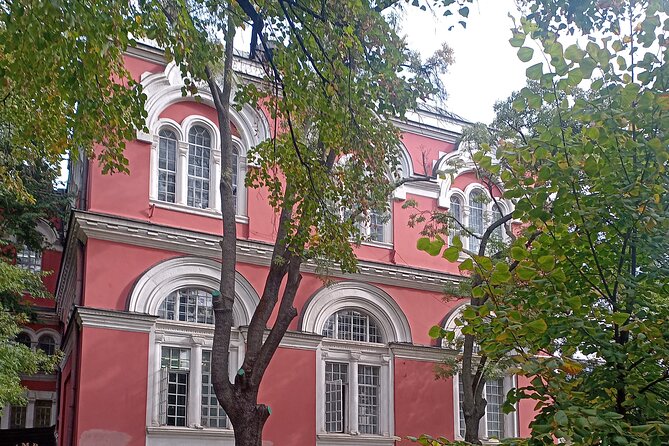
Now the tour goes literal with time travel. The Rotunda Church of St George is described as a late antique red brick rotunda, built in the early 4th century as Roman baths. It became a church inside the walls of Serdica, and it is considered the oldest building in modern Sofia, belonging to the Bulgarian Orthodox Church.
This stop is one of the most satisfying on a short tour because it is layered in both function and meaning. You are standing in a structure that started as bath architecture and later transformed into religious space.
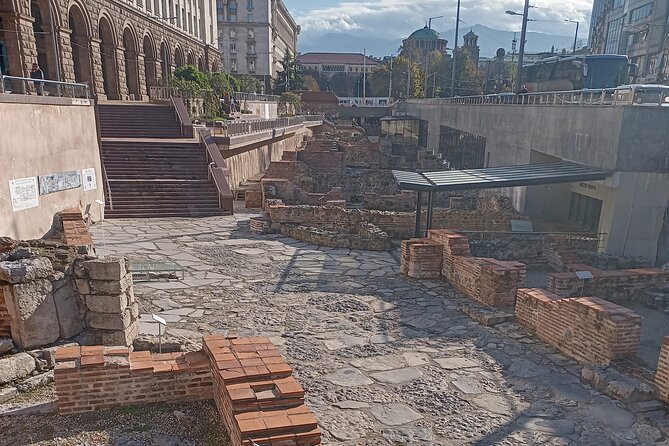
Then you move into the Ancient Serdica Archaeological Complex, where the route’s idea becomes tangible. You get areas divided into zones, including the Largo zone underneath Nezavisimost Square. You can see remains of the Roman town’s main street, the decumanus maximus, plus a residential building covering an entire insula, and even small shops tied to daily life.
A neat bonus here is that the complex includes a lapidarium nearby, which is a common way cities preserve stone fragments and inscriptions for context. With limited time (around 15 minutes), you get the big picture, not every detail.
If you like Roman cities, this is a strong “core” stop. If you do not, you can still enjoy it because the guide can explain what you are seeing in plain terms, not in academic code.
Central Mineral Baths, The Central Sofia Synagogue, and Banya Bashi Mosque: Ottoman and Vienna in One Route
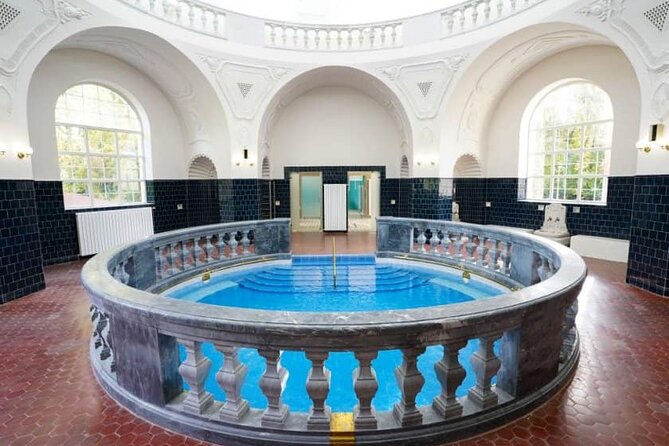
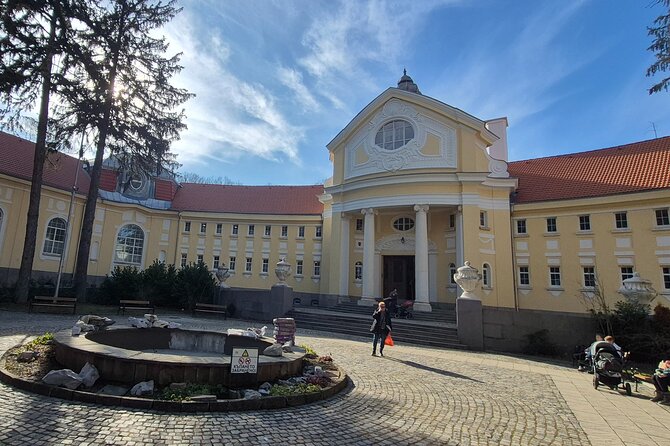
The route keeps broadening. The Central Mineral Baths building is described as Vienna Secession style, but it also integrates typically Bulgarian, Byzantine, and Eastern Orthodox ornamental elements. It was designed in 1904 to 1905 and approved on 30 January 1906, with architects Petko Momchilov and Friedrich Grünanger.
This stop matters because it connects Sofia’s wealth and health culture to architecture. Mineral baths are not just a fun side story, they show why parts of the city developed the way they did.
Then you see the Central Sofia Synagogue story, which adds another layer of local history. The Jewish community collected donations and invited Friedrich Grünanger, and construction completed in just four years. You are also told that tombstones from an old Jewish cemetery were used to build the base of the synagogue, and the construction value is listed at 437,000 golden leva.
Finally, the tour includes Banya Bashi Mosque, built in 1576 during Ottoman expansion, associated with Miamar Sinan. The name means many baths, tying it back to the area’s hot mineral spring reputation.
If you are someone who likes architecture with human history behind it, this is a highlight run of stops. The only catch is that each is brief. You are seeing a lot of different faith and design signals quickly, so keep your priorities in mind and take a few photos you can revisit later.
West Gate of Serdica and Zhenski Pazar, Ending Near Central Market Hall
The final historical hit is the West Gate of Sofia, the Western Gate of Serdica. It is protected by towers, including a preserved pentagonal tower and another triangular tower near it. This is a good stop for snapping your mental map into place because it sits near major modern streets and landmarks.
Then you move to Zhenski Pazar Market, described as the oldest market in Sofia, established more than 140 years ago. This part is about turning your history knowledge into city-life observations.
The walk ends near Central Sofia Market Hall, with the meeting point and end location given so you can finish close to transport. That matters because you are not stuck backtracking. You can hop to dinner or continue exploring while your feet are still semi-functional.
If you want one practical strategy: use the market area as your reset. Grab water or a quick snack, then decide what you want to return to after seeing the whole route.
Price and Value: Is 45.66 Worth It for a Sofia Walking Tour?
At $45.66 per person for an approximately 2 to 3 hour experience, the value depends on what you want from the day.
Here is why I think it is reasonable:
- You get a guided walk through major Sofia anchors, including sites that are listed with free admission
- You include tram or metro transport, covered via a city transport card
- You get a small group size, capped at 10, which usually means better interaction per minute
- You also get indoor time at places that are not always easy to fit into a first-day plan
What could lower the value for some people is the short visit time per stop. If you want deep museum time, you may end up using the tour mostly as a “preview.” But that is not a flaw, it is a planning style. A short, focused guide route is often the best way to decide where to spend more time later.
If you are a first-timer to Sofia and want a smart intro, this tour makes budget sense.
Should You Book This Sofia Old Town Walk?
Book it if you want:
- A tight 2 to 3 hour route that gives you a real understanding of central Sofia
- The chance to go inside the national library and the university
- A mix of Roman, Byzantine and Ottoman architecture plus major modern civic buildings
- A guide who is patient and takes questions seriously, with small-group energy from Peter
Skip it or pair it with extra time if you:
- Want long stays inside museums or religious sites
- Hate short stopovers and would rather wander independently from stop to stop
Overall, I recommend it as a first or second day tour. It helps you sort Sofia into eras quickly, and then you can build the rest of your trip around what actually interests you.
FAQ
What is the duration of the Sofia walking tour with tram ride?
The tour runs about 2 to 3 hours.
How much does the tour cost?
The price listed is $45.66 per person.
Is the tour in English?
Yes, it is offered in English.
Does the tour include public transportation?
Yes. It includes a city transport card and a short tram or metro ride.
Where do you start and where does it end?
It starts at Saint Sofia Church, Old City Center, ul. Paris 2, 1000 Sofia. It ends at Central Market Hall of Sofia, Sofia Center, bul. Knyaginya Maria Luiza 25, level -1.
How many people are in the group?
The tour has a maximum of 10 travelers.
Are there free admission stops included?
The information provided lists free admission tickets for the listed stops, including Saint Sofia Church, St. Alexander Nevski Cathedral, the National Library, and other stops on the route.
More Tours Around Bulgaria
- Rila Monastery and Boyana Church Full-Day Tour★ 4.5 · 918 reviews
- From Sofia: Rila Monastery & Boyana Church Day Tour★ 4.5 · 866 reviews
- Communist Walking Tour of Sofia★ 5.0 · 690 reviews
- Sofia Highlights 2 Hour Sightseeing Walking Tour★ 5.0 · 442 reviews
More Bulgaria Reviews
- Rila Monastery and Boyana Church Full-Day Tour★ 4.5 · 918 reviews
- Sofia Escape Room – Teorema Rooms★ 5.0 · 895 reviews
- From Sofia: Rila Monastery & Boyana Church Day Tour★ 4.5 · 866 reviews
- Communist Walking Tour of Sofia★ 5.0 · 690 reviews
Sofia on Foot, Other Routes
- Communist Walking Tour of Sofia★ 5.0 · 690 reviews
- Sofia Highlights 2 Hour Sightseeing Walking Tour★ 5.0 · 442 reviews
- Guided Walking Tour of Sofia★ 5.0 · 143 reviews
- Private city walking tour of Sofia★ 5.0 · 141 reviews
Newer Bulgaria reviews, fresh off the desk
- Private Winter Day Trip to the Rila Mountain
★ 4.5 · 3 reviews - Transfer from Sofia to Stara Zagora
★ 5.0 · 3 reviews - Tour to Koprivshtitsa and the Buzludzha monument incl the Seuthes Thracian Tomb
★ 3.5 · 3 reviews - Catacomb Tour in Sofia guided by a Local
★ 4.5 · 3 reviews - Symbol of the Communism Buzludzha monument and the Rose valley
★ 5.0 · 3 reviews - Private 2 Hours Sofia Street Art and Graffiti Tour
★ 5.0 · 3 reviews
Sofia City & Walking Tours, compared.
 ★ 5.0Communist Walking Tour of SofiaFrom $21690 reviews
 ★ 5.0Sofia Highlights 2 Hour Sightseeing Walking TourFrom $19442 reviews
 ★ 5.0Guided Walking Tour of SofiaFrom $48143 reviews
 ★ 5.0Private city walking tour of SofiaFrom $183141 reviews
 ★ 5.0Sofia Walking Private City TourFrom $84127 reviews
 ★ 5.0History and Heritage – Small Group City TourFrom $1984 reviews
 ★ 4.5Sofia by Night Panoramic Tour with Dinner and Folklore ShowFrom $16141 reviews
 ★ 4.5Private City Tour of SofiaFrom $3134 reviews
Browse the lists this tour appears in