
REVIEW · PLOVDIV OLD TOWN & DAY TRIPS
Plovdiv Old Town Self-Guided Audio Tour
Roman ruins meet medieval mosques here. This Plovdiv Old Town self-guided audio tour gives you a tight loop of landmarks, explained in English, so you can roam when you feel like it. You follow a route on your phone, hit the highlights on foot, and keep moving without waiting for anyone else.
I especially like two things. First, the route lands you at the Ancient Theatre of Philippopolis, one of the best-preserved Roman theatres in this part of the world. Second, the walk is packed with free-admission stops, so your money mostly goes to the audio, not entrance fees.
One caution: the experience depends on your phone map, and the PDF map can be hard to read or zoom in bright sun. If you hate juggling screens, you may find it mildly annoying.
In This Review
- Key Things to Know Before You Start
- A Self-Guided Walk That Actually Fits Real Life
- From Djumaya Mosque to Philippopolis Stadium: Early Stops With Big Context
- Churches, Monastery Loss, and a House-Stop Break in the Middle
- The Ancient Theatre of Philippopolis: Why This Stop Is the Main Payoff
- Nebet Tepe, Hisar Kapia, and St. Constantine and Helena
- Museum Decisions: Free Stops vs Ticketed Ones
- Price Value: Why This Costs What It Costs
- The Map Reality Check, and How to Make It Smooth
- Should You Book This Plovdiv Old Town Audio Tour?
- FAQ
- How long is the Plovdiv Old Town self-guided audio tour?
- Where does the tour start and end?
- Is the audio guide available in English?
- Is admission included for all stops?
- Are tickets mobile or printed?
- Is this tour private?
- What kind of walking is involved?
- Is there any discount included?
- When can I use the tour?
Key Things to Know Before You Start
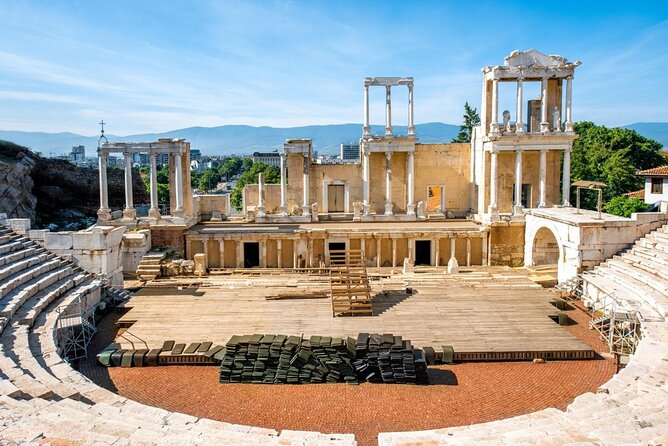
- Roman Theatre is a main event, and it sits right in the center of modern Plovdiv, so it feels practical, not a detour.
- Most stops are free, including Djumaya Mosque, the Ancient Stadium, Casa Lamartine, Balabanov House, Nebet Tepe, Hisar Kapia, and several churches and archaeological areas.
- Some good museum stops cost extra, specifically Ethnographic Museum, Small Basilica, and TrakArt (their tickets are not included).
- The audio is short and paced by stop, with quick segments that make it easier to keep your place as you walk.
- You get a 15% discount at a city restaurant, which can sweeten the value if you plan to eat nearby during your route.
- You need a bit of phone-map patience, since the route can involve switching between the audio and the on-screen map.
Plovdiv again, done a few different ways
- Private city walking tour of Plovdiv★ 5.0 · 65 reviews
- Food Walk: Bulgarian Food and Culture Tour in Plovdiv★ 5.0 · 35 reviews
- Wonderful Bridges-Bachkovo Monastery-Assen’s Fortress – day tour from Plovdiv★ 5.0 · 32 reviews
- Plovdiv guided walking tour★ 5.0 · 31 reviews
A Self-Guided Walk That Actually Fits Real Life
This is not a long bus tour with a lecture at every stop. It is a walk with audio in your pocket, designed for 2 to 3 hours. That timing matters in Plovdiv, because the Old Town is best when you can pause for photos, catch your breath, and look closer at details when the mood hits.
You start and finish at the Ancient Stadium of Philipopolis in the Staria grad area (Plovdiv Center, ul. Hristo G. Danov, 4000 Plovdiv). The audio route is built around a center-of-action loop, so you are not spending half your time crossing the city. It also runs daily, 9:00 AM to 6:00 PM during the listed period (Monday to Sunday).
Because it is private and only for your group, you do not have to pace with strangers. If you walk slower, you still finish when you are ready. If you are fast and focused, you can move efficiently between landmarks.
And yes, it is in English, so you are not stuck hunting for a guide who speaks your language.
From Djumaya Mosque to Philippopolis Stadium: Early Stops With Big Context
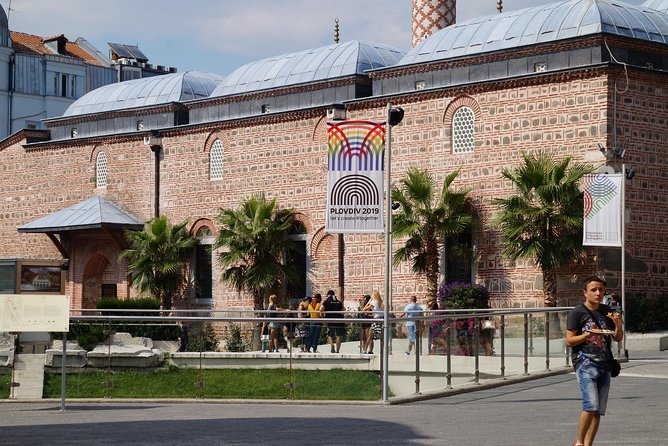
The tour opens with Jumaya Mosque, a medieval Muslim temple in Plovdiv. The audio covers the uncertainty you often find with older monuments, including that it may have been built under Sultan Murad I (1362 to 1389) or Sultan Murad II (1421 to 1451). That is a neat detail because it trains your eye. When you look at the building, you are not just seeing a pretty stop, you are also hearing how historians try to date it.
This first stop is quick, about 5 minutes, and that is a good thing. It helps you get oriented fast. Once you are listening and walking, you start to understand the structure of the whole loop: short segments, each anchored to a specific place.
Next comes the Ancient Stadium of Philippopolis, built in the 2nd century AD during the Roman imperial period. The audio framing here is practical. You see the stadium as a piece of everyday Roman life, not a distant ruin. Since admission is free for this stop, you can also linger a little longer if the views and stonework catch your attention.
If you like stories that connect architecture to power and time, these two early stops set the tone. You start with medieval religious history, then shift to Roman public spectacle, all without breaking the flow.
Churches, Monastery Loss, and a House-Stop Break in the Middle
After the stadium, the route moves to the Church of the Holy Mother of God. What makes this stop interesting is the long timeline. There was a church on this site as early as the 9th century. It was renovated in 1186 by the bishop Constantine Pantehi, and it became part of a monastery. Then the audio also explains the downside of history: the church and monastery were destroyed in 1371 when Ottoman forces conquered the city during the Bulgarian-Ottoman wars.
This kind of story can feel heavy. But it also gives you a reason to care about a smaller structure. When you understand what was here before, even a modest church site feels more alive.
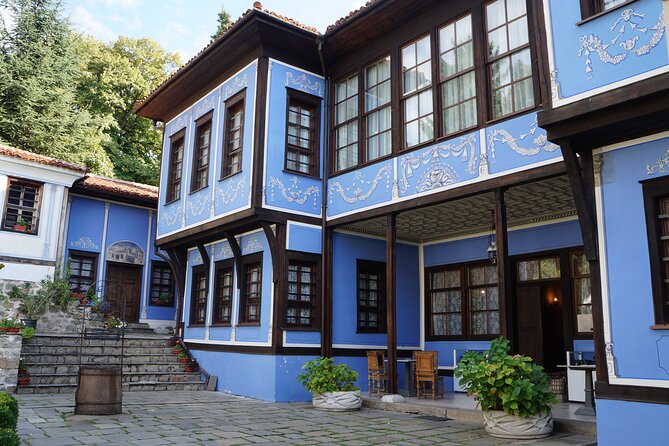
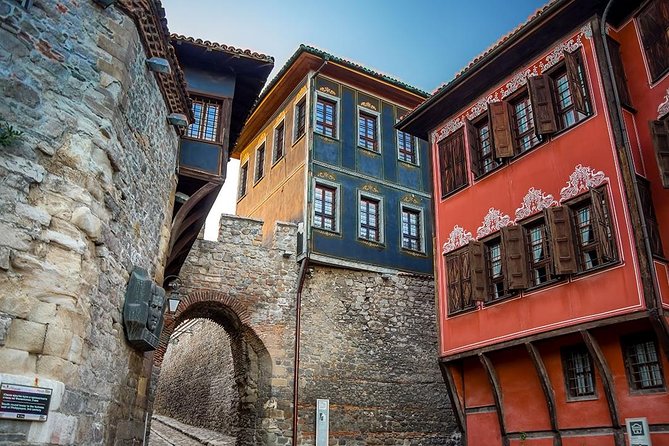
A nice change of pace follows: Casa Lamartine. This is one of the biggest and most beautiful symmetrical houses in the Old City, built by an unknown master-builder in 1829 to 1830. Even if you do not know anything about the house beforehand, the symmetry is the kind of visual clue that the audio helps you notice.
The route then adds Balabanov House, also known as the House of Hadji Panayot Lampsha. It is a museum house built at the beginning of the 19th century. In other words, you get a break from Roman and medieval dates and step into 1800s Plovdiv domestic life.
Both of these house stops are free-admission, so you can use them like a palate cleanser. You get something more human-scaled after the big historical swings of mosques and empires.
More guided days across Bulgaria
The Ancient Theatre of Philippopolis: Why This Stop Is the Main Payoff
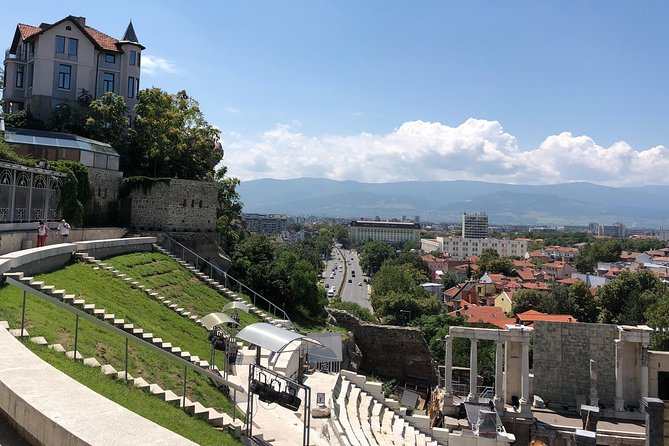
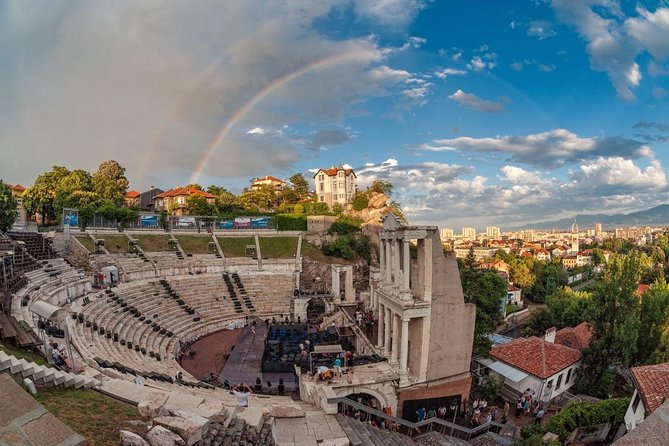
The Ancient Theatre of Philippopolis is the showpiece on the walk. The audio presents it as one of the world’s best-preserved ancient Roman theatres, right in the city center of modern Plovdiv. That matters, because it keeps the experience grounded. You are not hunting for a remote ruin. You are seeing how the ancient site fits into daily life around it.
This stop is about 10 minutes in the route, and I think that is smart. You can look at the seating and the structure, then read the audio story without getting bored. If you want more time, you can extend naturally by slowing down, but the audio is designed so you are not forced to rush to the next point.
Also, the theatre works great as a mental reset. After listening to long timelines, you end up watching the shape of the building and how sound and sight lines would have worked. Even if you are not an archaeology nerd, the theatre has a way of pulling you in.
If you only have one part of Plovdiv Old Town to do, this is the anchor.
Nebet Tepe, Hisar Kapia, and St. Constantine and Helena
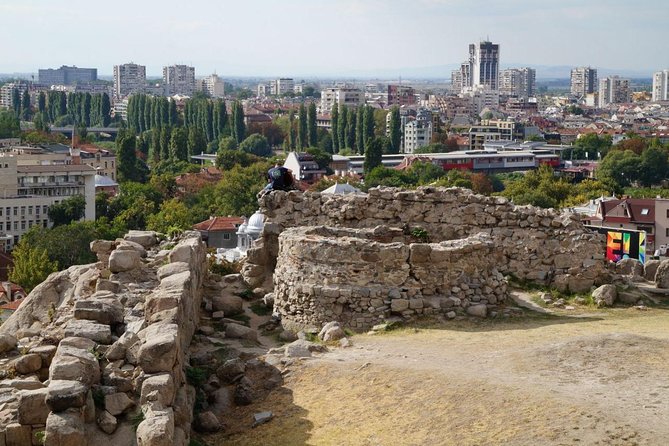
From the theatre area, the route heads toward Nebet Tepe, one of Plovdiv’s hills and the place where the ancient town was founded. The earliest settlements on Nebet Tepe are dated back to 4000 BC, which is a mind-bending range if you think about it too long. The audio gives you a reason to connect that date to what you see now, even though you are mostly surrounded by modern streets and lookout lines.
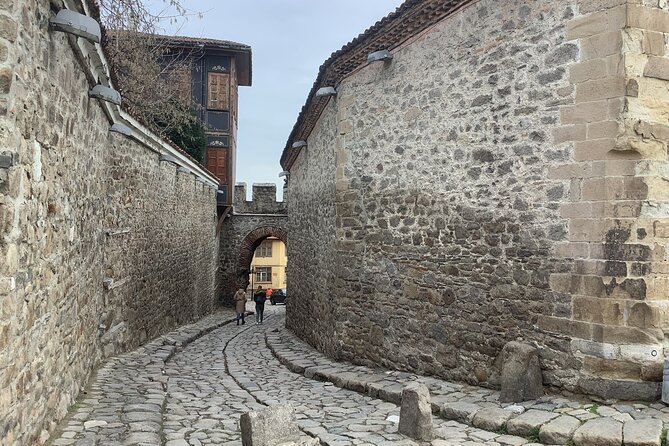
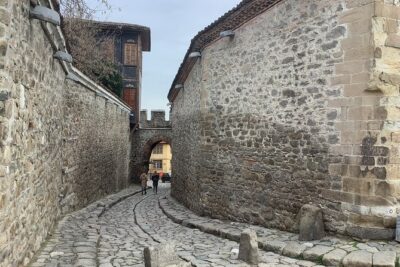
After Nebet Tepe, you reach Hisar Kapia (Hisar Kapı, meaning castle gate). It is a medieval gate and one of the most famous tourist sights in Plovdiv’s Old Town. In a walk like this, a gate stop is more than a photo op. It helps you picture how movement worked, how entrances to defended areas mattered, and why the old town layout feels the way it does.
Then the route includes the Small Basilica (5th to 6th century), and later the Church of Saints Constantine and Helena. The basilica stop has ticket not included, so you have to decide on the spot if it fits your budget that day.
The Saints Constantine and Helena church is included as a free stop and has a compelling origin story. It was built in 337 at the sight of an ancient pagan temple on the acropolis on a fortified hill. Whether you like religious history or not, that shift from pagan temple to church is the kind of transformation audio is good at making sense of.
Museum Decisions: Free Stops vs Ticketed Ones
A big part of the value here is the mix of free and paid stops. Many of your listed highlights are free-admission, including the mosque, stadium, key houses, the theatre, Nebet Tepe, and the gate. That makes the audio tour feel affordable, even if you end up skipping a ticketed museum.
However, three stops are marked as admission ticket not included:
- Plovdiv Regional Ethnographic museum
- Small Basilica Archeological Site
- Cultural Center-Museum TrakArt
If you love museum depth, you can add these and stretch your time beyond the core 2 to 3 hours. If you prefer walking and big sights over indoor reading, you can skip them and still feel like you got the core route.
TrakArt is especially tempting if you like objects and hands-on history. The museum features in situ ancient Roman mosaic from the 3rd to 4th century, plus exhibits on glass in ancient art, from the 5th century BC to the 4th century AD. It also includes a protothracian portrait exhibition with ceramic objects from the eneolith and neolith, and Roman miniature portraits from the 1st century BC up to the 1st century AD. Even if you are not planning to enter, knowing what is there helps you decide based on your interests.
Price Value: Why This Costs What It Costs
At $15.49 per person, you are paying for the audio experience, not a guided staff member. That can feel like a lot for a walking tour, unless you look at what you get.
You get:
- English narration tied to a sequence of major landmarks
- A route built for 2 to 3 hours on foot
- Many stops with free admission, which keeps your day budget under control
- A 15% discount at a city restaurant, which can help offset a meal expense if you plan to eat during or right after your walk
So the value depends on how you tour. If you like self-paced history and you enjoy hitting several sites in one loop, the price makes sense. If you only want one or two sights, you might feel like the audio cost is heavier than a single attraction ticket.
The best bargain strategy is simple: treat it like a guided walk that happens without a live guide. You are buying time efficiency and context, not just access to buildings.
The Map Reality Check, and How to Make It Smooth
The main practical snag is the need to juggle the on-phone map with the audio. In bright Old Town sun, small text or hard-to-zoom PDFs can slow you down. The route is easy to follow when the map is readable, and it is easy to keep moving when you know which stop you are aiming for.
My advice: before you start walking, get your phone screen settings ready for high brightness and do a quick practice step. Then commit to one direction and one viewing pattern. If you try to constantly switch between zoom levels and audio timing, you will lose the rhythm.
Also, because this is a self-guided format, your pace is your pacing. That is great for comfort, but it also means you are responsible for staying oriented. If you are the type who likes friction-free tours, a paper map can be a helpful backup idea.
Should You Book This Plovdiv Old Town Audio Tour?
Book it if you want a structured walk through Plovdiv’s standout landmarks, with English audio explanations and lots of free stops. It is a strong pick for first-time visitors who want to hit the Roman Theatre of Philippopolis and also understand how the walk connects to medieval and older sites. It also fits well if your travel style is flexible, because you can slow down at the places that grab you.
Skip it or consider a lighter plan if you hate phone-based navigation or you prefer a live guide who can adjust on the fly. The route still works, but the audio plus map switching is part of the deal.
For me, the decision comes down to this: if you will actually walk 2 to 3 hours and enjoy listening while you explore, this tour feels worth the ticket.
FAQ
How long is the Plovdiv Old Town self-guided audio tour?
It takes about 2 to 3 hours to complete, based on how long you spend at each stop.
Where does the tour start and end?
The tour starts at the Ancient Stadium of Philipopolis in Staria grad, Plovdiv Center (ul. Hristo G. Danov, 4000 Plovdiv, Bulgaria) and ends back at the same meeting point.
Is the audio guide available in English?
Yes, the audio guide is offered in English.
Is admission included for all stops?
Most stops are listed as free admission. Ethnographic Museum, Small Basilica, and TrakArt are listed as admission ticket not included.
Are tickets mobile or printed?
You receive a mobile ticket.
Is this tour private?
Yes. It is private, meaning only your group participates.
What kind of walking is involved?
The tour is suitable for travelers with moderate physical fitness level. It is a walking experience through the Old Town.
Is there any discount included?
Yes. The tour includes a 15% discount at a city restaurant.
When can I use the tour?
The activity is listed as available Monday to Sunday from 9:00 AM to 6:00 PM during the stated period (11/29/2022 to 03/21/2027).
More Tours Around Bulgaria
- Private city walking tour of Plovdiv★ 5.0 · 65 reviews
- Food Walk: Bulgarian Food and Culture Tour in Plovdiv★ 5.0 · 35 reviews
- Wonderful Bridges-Bachkovo Monastery-Assen’s Fortress – day tour from Plovdiv★ 5.0 · 32 reviews
- Plovdiv guided walking tour★ 5.0 · 31 reviews
More Bulgaria Reviews
- Private city walking tour of Plovdiv★ 5.0 · 65 reviews
- Food Walk: Bulgarian Food and Culture Tour in Plovdiv★ 5.0 · 35 reviews
- Wonderful Bridges-Bachkovo Monastery-Assen’s Fortress – day tour from Plovdiv★ 5.0 · 32 reviews
- Plovdiv guided walking tour★ 5.0 · 31 reviews
Still in Plovdiv? Keep Going
- Private city walking tour of Plovdiv★ 5.0 · 65 reviews
- Food Walk: Bulgarian Food and Culture Tour in Plovdiv★ 5.0 · 35 reviews
- Wonderful Bridges-Bachkovo Monastery-Assen’s Fortress – day tour from Plovdiv★ 5.0 · 32 reviews
- Plovdiv guided walking tour★ 5.0 · 31 reviews
Newer Bulgaria reviews, fresh off the desk
- Transfer Plovdiv to Sofia airport/city with a car 3+1
★ 5.0 · 3 reviews - Private Buggy Experience All Seasons in Pamporovo
★ 5.0 · 3 reviews - Plovdiv Roman Sights Self-Guided
★ 4.5 · 3 reviews - Private Cascades Waterfall Horseback Riding Tour from Smolyan
★ 5.0 · 4 reviews - Koprivshtitsa – private day tour from Plovdiv
★ 5.0 · 4 reviews - Hiking to Eagle’s Eye and Devil’s Throat Cave
★ 5.0 · 4 reviews
Plovdiv Old Town & Day Trips, compared.
 ★ 4.5Plovdiv – Group Day Trip from SofiaFrom $22304 reviews
 ★ 4.5Plovdiv Small Group Full Day Guided Tour from SofiaFrom $22235 reviews
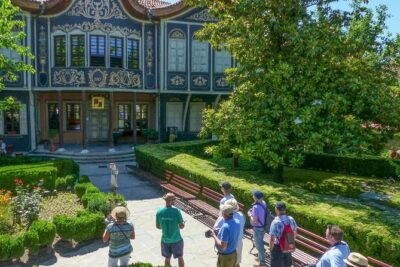 ★ 4.5Plovdiv and Koprivshtitsa Full-Day TripFrom $24177 reviews
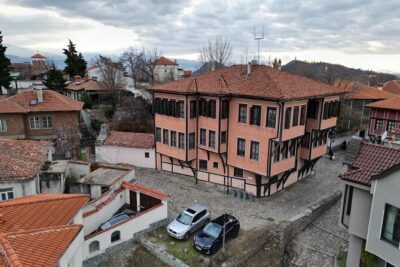 ★ 5.0Small group tour to Plovdiv, Asen’s Fortress and Bachkovo MonasteryFrom $90164 reviews
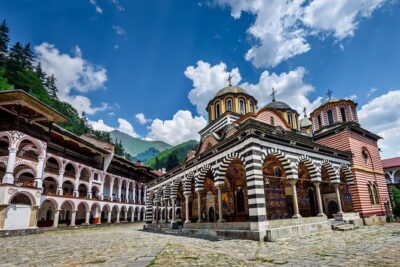 ★ 4.5Plovdiv and Rila Monastery tour in one dayFrom $11987 reviews
 ★ 5.0Private city walking tour of PlovdivFrom $18465 reviews
 ★ 4.5From Sofia: Rila Monastery and Plovdiv Day TripFrom $7152 reviews
 ★ 4.5Full-Day Plovdiv and Asen’s Fortress Tour from SofiaFrom $3536 reviews
Browse the lists this tour appears in